

Why Open-Source eCommerce Platforms Still Lead
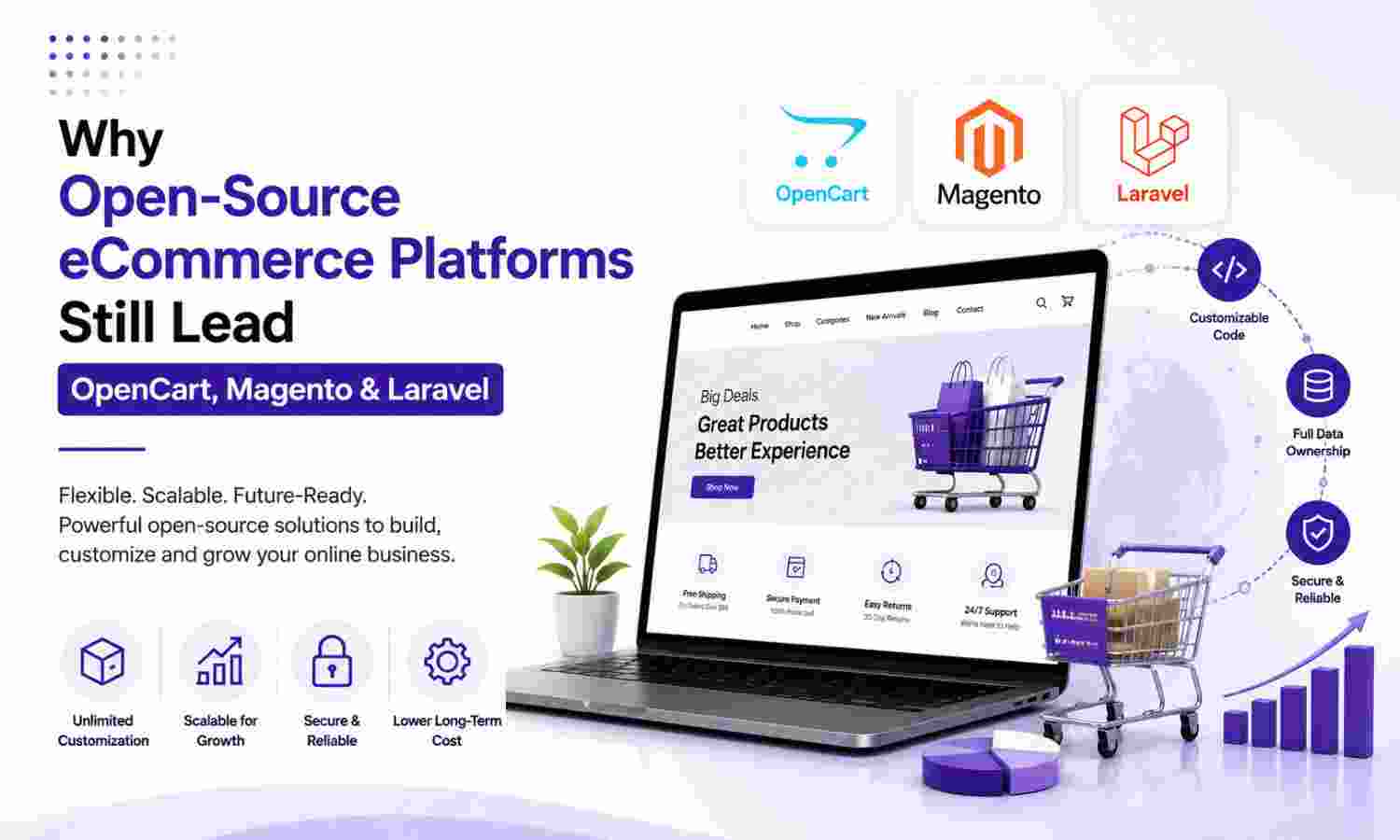
Why Open-Source Platforms Continue to Dominate eCommerce Development
The eCommerce landscape has evolved rapidly, with businesses able to choose from both Software-as-a-Service (SaaS) platforms and open-source solutions. While hosted platforms offer quick deployment, open-source technologies continue to be the preferred choice for businesses seeking long-term growth, complete ownership, and unlimited customization.
Platforms such as OpenCart, Magento Open Source, and Laravel-based custom applications remain among the most trusted technologies for building scalable and feature-rich online stores.
What Makes Open-Source eCommerce Different?
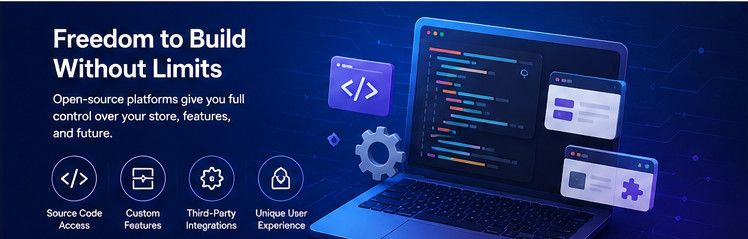
Unlike hosted platforms, open-source eCommerce software provides complete access to the source code. Businesses can customize every aspect of their online store, choose their preferred hosting provider, integrate third-party services, and optimize performance without platform limitations.
Key Benefits Include
- Complete ownership of website and customer data
- Unlimited customization possibilities
- Freedom to select hosting infrastructure
- Advanced security implementation
- Better long-term cost efficiency
- Greater scalability as the business grows
Why Businesses Still Choose Open-Source Platforms
Complete Ownership
Open-source platforms give businesses full control over their website, database, files, and integrations. There are no vendor lock-ins, allowing companies to expand their online stores according to their own business goals.
Unlimited Customization
Every business has unique requirements. Open-source solutions make it possible to build custom checkout processes, vendor marketplaces, subscription systems, B2B portals, ERP integrations, and many other advanced features without being restricted by platform limitations.
Better Long-Term Investment
Although custom development may require an initial investment, businesses avoid recurring platform subscription fees and gain greater flexibility as they grow.
Excellent SEO Capabilities
Open-source platforms provide complete control over technical SEO, including custom URLs, metadata, schema markup, XML sitemaps, redirects, page speed optimization, and structured data implementation.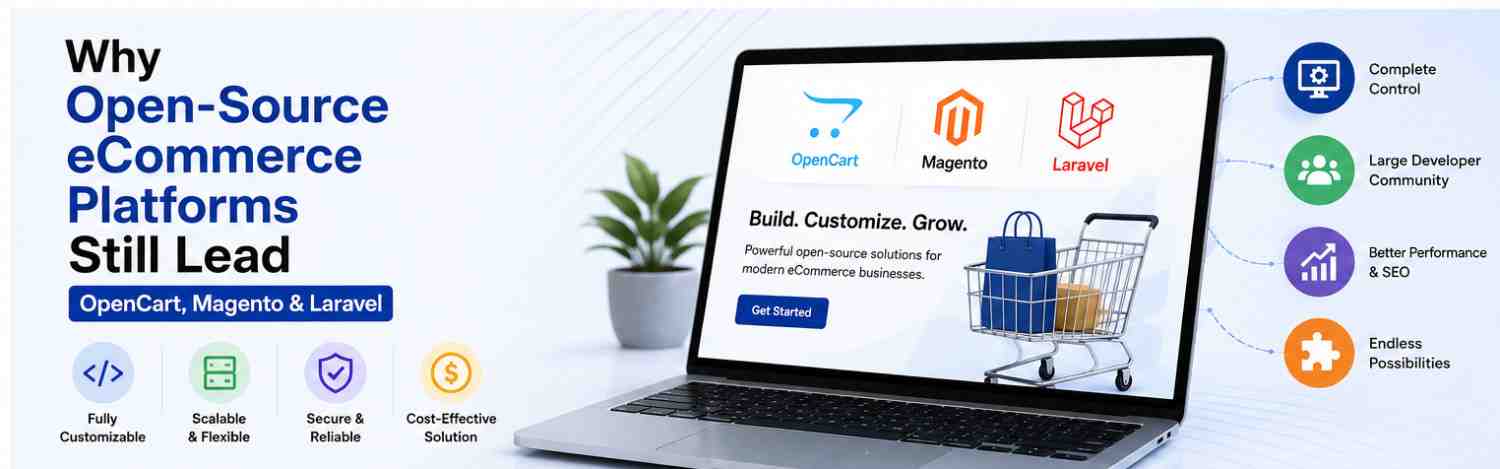
OpenCart: A Powerful Choice for Growing Businesses
OpenCart is a lightweight and user-friendly eCommerce platform suitable for startups and small-to-medium businesses. Its simple administration panel, extensive extension marketplace, multi-store capabilities, and SEO-friendly architecture make it one of the most popular open-source shopping cart solutions worldwide.
Best Suited For
- Startups
- Retail businesses
- Fashion stores
- Electronics stores
- Multi-vendor marketplaces
- Growing online businesses
Magento: Enterprise-Level Commerce Platform
Magento Open Source is designed for businesses requiring enterprise-grade scalability and advanced eCommerce capabilities. It supports large product catalogs, multiple storefronts, customer segmentation, and powerful integrations with ERP, CRM, and marketing systems.
Ideal For
- Large retailers
- Manufacturers
- B2B businesses
- Global brands
- Enterprise organizations
Laravel for Custom eCommerce Development
Laravel is not a ready-made shopping platform but a modern PHP framework that enables developers to build completely customized eCommerce applications. It is an excellent choice for businesses requiring unique workflows, API-first architecture, marketplace functionality, or headless commerce solutions.
Laravel Advantages
- Fully customized architecture
- Modern development framework
- REST API support
- High-performance applications
- Scalable business logic
- Easy third-party integrations
Open-Source vs SaaS Platforms
Open-Source Advantages
- Full ownership of website and data
- Unlimited customization
- No vendor lock-in
- Advanced SEO flexibility
- Complete performance optimization
- Better scalability for future growth
When SaaS Platforms Work Best
Hosted platforms are suitable for businesses looking for a quick launch with minimal technical management. However, growing businesses often require more flexibility than these platforms can provide, making open-source technologies a better long-term investment.
Future of Open-Source eCommerce
Open-source platforms continue to evolve alongside emerging technologies such as headless commerce, AI-powered personalization, Progressive Web Apps (PWAs), API-first architecture, and cloud-native deployments. Their flexibility ensures businesses can adapt to changing customer expectations without migrating to an entirely new platform.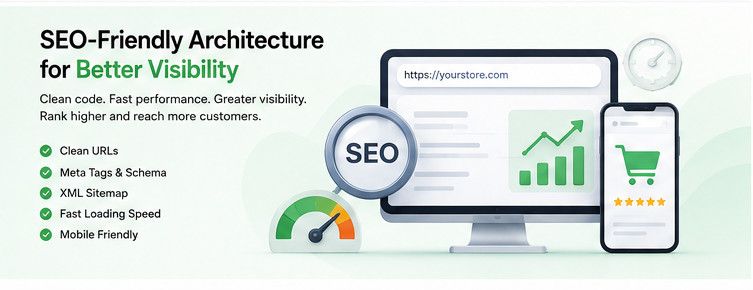
Conclusion
Open-source eCommerce platforms remain the preferred choice because they offer complete ownership, unmatched flexibility, better scalability, and long-term cost efficiency. Whether you choose OpenCart for its simplicity, Magento for enterprise capabilities, or Laravel for fully customized applications, open-source technology provides a strong foundation for building future-ready online businesses.
Frequently Asked Questions
Is OpenCart suitable for small businesses?
Yes. OpenCart is lightweight, affordable, easy to manage, and ideal for startups and growing online stores.
Why do enterprises prefer Magento?
Magento offers enterprise-grade scalability, advanced catalog management, multi-store functionality, and extensive integration capabilities.
Is Laravel an eCommerce platform?
No. Laravel is a PHP framework that allows developers to build fully customized eCommerce applications tailored to specific business requirements.
Are open-source platforms SEO-friendly?
Yes. Open-source platforms provide complete control over URLs, metadata, structured data, XML sitemaps, redirects, and page performance, making them highly effective for SEO.
Which platform should I choose?
The right platform depends on your business size and goals. OpenCart is excellent for startups and SMEs, Magento is ideal for enterprise businesses, while Laravel is the preferred choice for fully customized eCommerce solutions.