

What Is a Multi-Vendor Marketplace? Benefits, Features, Working & Revenue Potential
E-commerce has evolved significantly over the last few years. Customers today expect variety, competitive pricing, multiple sellers, convenient shopping, and a seamless online buying experience. This changing customer expectation has made the multi-vendor marketplace business model increasingly popular.
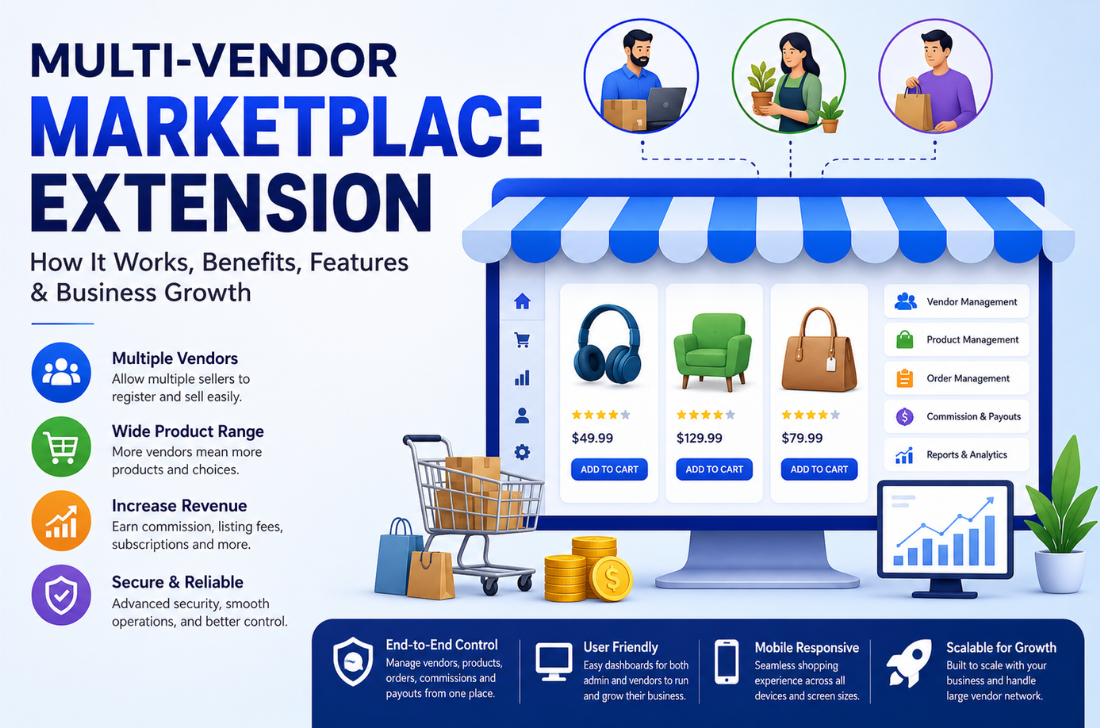
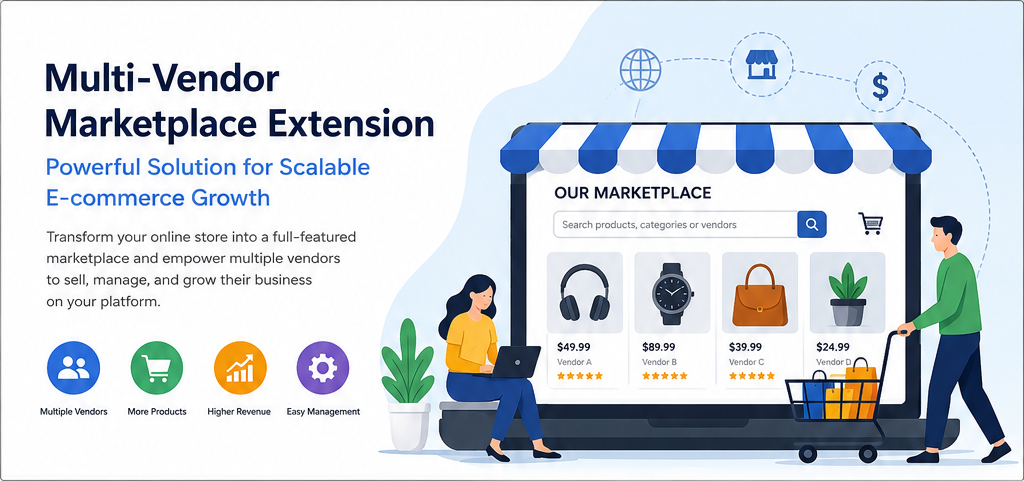
A multi-vendor marketplace extension allows businesses to transform a traditional online store into a marketplace where multiple independent sellers can register, create their stores, list products, manage orders, and sell directly to customers through a single platform.
Instead of managing every product and inventory item yourself, you can create an ecosystem where different vendors contribute products while your business manages the marketplace platform, customer experience, policies, commissions, and overall operations.
What Is a Multi-Vendor Marketplace Extension?
A multi-vendor marketplace extension is a software module or plugin that adds marketplace functionality to an existing e-commerce website. It enables multiple sellers to operate their own stores within one centralized online marketplace.
A traditional e-commerce store generally has one business managing the catalog, inventory, orders, and customers. With a multi-vendor marketplace extension, multiple independent sellers can participate in the same platform.
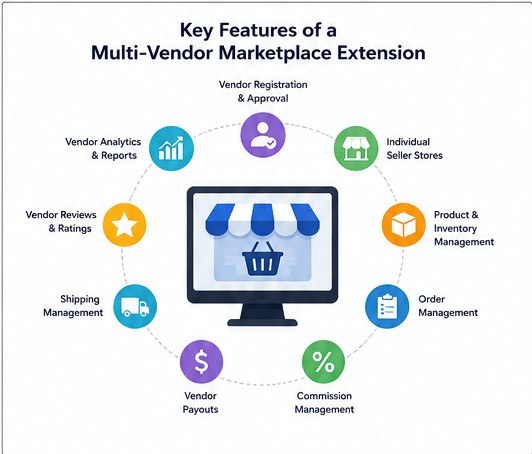
A multi-vendor marketplace extension can provide features such as:
- Vendor registration and approval
- Individual seller stores
- Vendor dashboards
- Product management
- Inventory management
- Order management
- Commission management
- Vendor payouts
- Shipping management
- Seller reviews and ratings
- Vendor analytics and reports
- Marketplace-wide administration
Why Does a Business Need a Multi-Vendor Marketplace?
In a traditional e-commerce business, expanding the product catalog often requires additional inventory, warehouse space, suppliers, employees, and working capital. This can make rapid expansion expensive and operationally challenging.
A marketplace model offers a different approach. Instead of purchasing and maintaining every product yourself, you can allow third-party sellers to bring their own products and inventory to your platform.
The marketplace owner provides the technology and infrastructure, while sellers contribute products, inventory, and business expertise.
How Does a Multi-Vendor Marketplace Work?
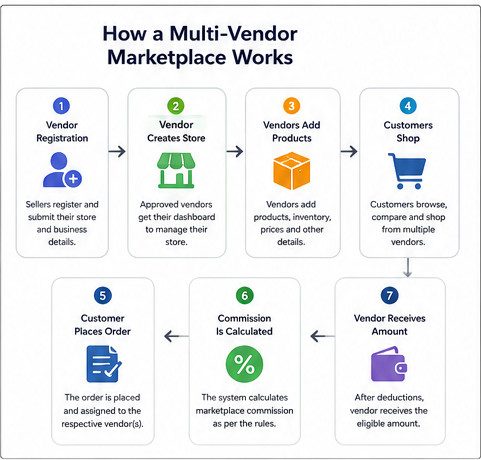
The basic working process is straightforward. Vendors join the platform, add products, customers purchase those products, and the marketplace manages the transaction and commission process.
1. Vendor Registration
Sellers register on the marketplace by providing their store information, contact details, payment information, and other required business details. The administrator can then review and approve the seller.
2. Vendor Creates a Store
Once approved, the seller receives access to a dedicated vendor dashboard. Depending on the marketplace configuration, the seller can manage products, inventory, orders, shipping, store information, and other activities.
3. Vendors Add Products
Vendors can add products with names, descriptions, images, prices, options, inventory, and other relevant information.
4. Customers Browse and Shop
Customers can browse products from different sellers, compare prices, read reviews, select products, and add them to their shopping cart.
5. Customer Places an Order
When the customer completes checkout, the marketplace identifies the vendors associated with the purchased products and processes the order accordingly.
6. Commission Is Calculated
The marketplace owner can establish commission rules. The system can automatically calculate the marketplace commission based on the configured business rules.
7. Vendor Receives the Eligible Amount
After applicable commissions and fees are calculated, the vendor receives the amount due according to the marketplace's payment and settlement process.
How a Multi-Vendor Extension Makes Operations Easier
Managing hundreds or thousands of sellers manually can be extremely difficult. A good multi-vendor marketplace extension simplifies operations through dedicated dashboards, automation, permissions, and centralized management.
Centralized Vendor Management
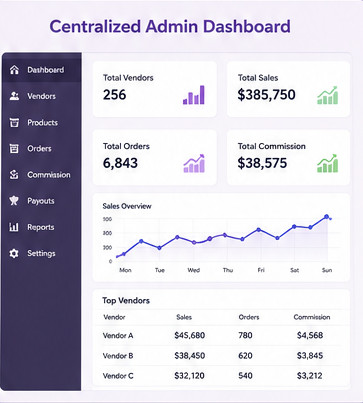
Administrators can approve sellers, update vendor information, activate or disable accounts, configure commissions, and monitor seller activities from a centralized dashboard.
Self-Service Product Management
Vendors can manage their own products instead of depending on the administrator for every product update. This reduces the workload for the marketplace team.
Order Management
Orders can be associated with the appropriate vendors, allowing sellers to view and manage their relevant orders while administrators retain overall control.
Automated Commission Management
Commission rules can be configured in advance, allowing the marketplace system to calculate commissions automatically.
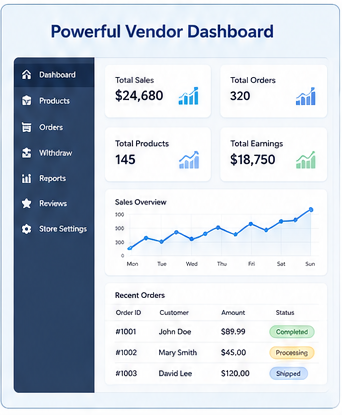
Vendor Dashboard
A dedicated seller dashboard gives vendors a simple way to manage their marketplace business without requiring administrator intervention for every task.
Major Benefits of a Multi-Vendor Marketplace
1. Expand Your Product Catalog Faster
Instead of adding every product yourself, multiple sellers can contribute thousands of products to your marketplace. This allows your product selection to grow much faster.
2. Reduce Inventory Investment
Depending on the marketplace model, sellers can manage their own inventory. The marketplace owner may therefore avoid purchasing and storing every product available on the platform.
3. Create Multiple Revenue Streams
A multi-vendor marketplace can generate revenue through several monetization models.
- Commission: Earn a percentage from vendor sales.
- Vendor Subscription: Charge sellers monthly or yearly fees.
- Listing Fees: Charge vendors for product listings.
- Featured Products: Offer paid promotional placement.
- Advertising: Sell advertising opportunities to vendors.
- Transaction Fees: Apply marketplace transaction charges.
- Premium Services: Offer additional tools and services.
4. Increase Customer Choice
Customers benefit from having more brands, products, sellers, prices, and options available in one place. A marketplace can become a convenient destination for product discovery and comparison.
5. Scale Without Proportionally Increasing Inventory
A marketplace can expand its product selection by onboarding additional sellers instead of purchasing every product itself. This creates a different and potentially more scalable growth model.
6. Build a Strong Seller Network
Every new vendor can potentially bring new products, customers, brands, and business opportunities to the platform.
More Vendors → More Products → More Customers → More Sales → More Vendors

How a Multi-Vendor Marketplace Can Transform Your Business
A marketplace extension is more than a simple feature addition. It can fundamentally change the way an e-commerce business operates.
Traditional E-Commerce Model
Buy Products → Store Products → Market Products → Sell Products → Fulfill Orders → Earn Profit
Multi-Vendor Marketplace Model
Build Platform → Attract Vendors → Attract Customers → Facilitate Transactions → Earn Commission and Fees
This shift can move a company from being primarily a retailer to becoming a digital commerce platform.
Multi-Vendor Marketplace Revenue Potential
The revenue potential depends on the number of active vendors, sales volume, average order value, commission percentage, customer retention, and additional monetization methods.
For example, consider this hypothetical marketplace:
- 500 active vendors
- Average monthly sales per vendor: $2,000
- Total monthly marketplace sales: $1,000,000
- Average marketplace commission: 10%
In this example:
$1,000,000 × 10% = $100,000 monthly commission revenue
This represents approximately $1.2 million in annual commission revenue, before operating expenses and other adjustments.
This is only a hypothetical example and should not be considered a guaranteed revenue forecast. Actual results depend on market demand, competition, customer acquisition costs, refunds, taxes, payment fees, logistics, seller quality, and operating expenses.
The Future of Multi-Vendor Marketplaces
Multi-vendor marketplaces are expected to remain an important part of e-commerce as businesses increasingly focus on platforms, ecosystems, personalization, and seller-driven commerce.
AI-Powered Marketplaces
Artificial intelligence can increasingly be used for personalized product recommendations, AI-powered search, automated customer support, product content generation, demand forecasting, fraud detection, pricing recommendations, and seller analytics.
Growth of Niche Marketplaces
Future marketplace growth will not be limited to large general-purpose platforms. Specialized marketplaces can focus on specific industries, products, regions, or customer groups.
Local Marketplaces
Local businesses and independent sellers can use marketplace technology to reach customers in specific cities, regions, and communities.
Social Commerce
Social media, influencers, creators, and online communities are becoming increasingly important parts of the customer buying journey. Future marketplaces may combine content, community, sellers, and commerce.
Smarter Seller Tools
Seller dashboards are expected to become more intelligent with advanced analytics, automated marketing, inventory predictions, pricing suggestions, sales forecasting, and AI-powered business recommendations.
Conclusion
A multi-vendor marketplace extension can transform a traditional e-commerce website into a scalable platform where multiple independent sellers can sell products to a shared customer base.
Instead of managing every product, supplier, and inventory item yourself, you can create an ecosystem where vendors contribute products while the marketplace manages technology, customer experience, commissions, policies, and overall platform operations.
The biggest opportunity is not simply adding more products. It is creating a business model where the growth of vendors, customers, transactions, and services contributes to the growth of the overall platform.
A traditional e-commerce store sells products. A multi-vendor marketplace builds an ecosystem around products, sellers, and customers.