

How to define Business Terms for an eCommerce website?
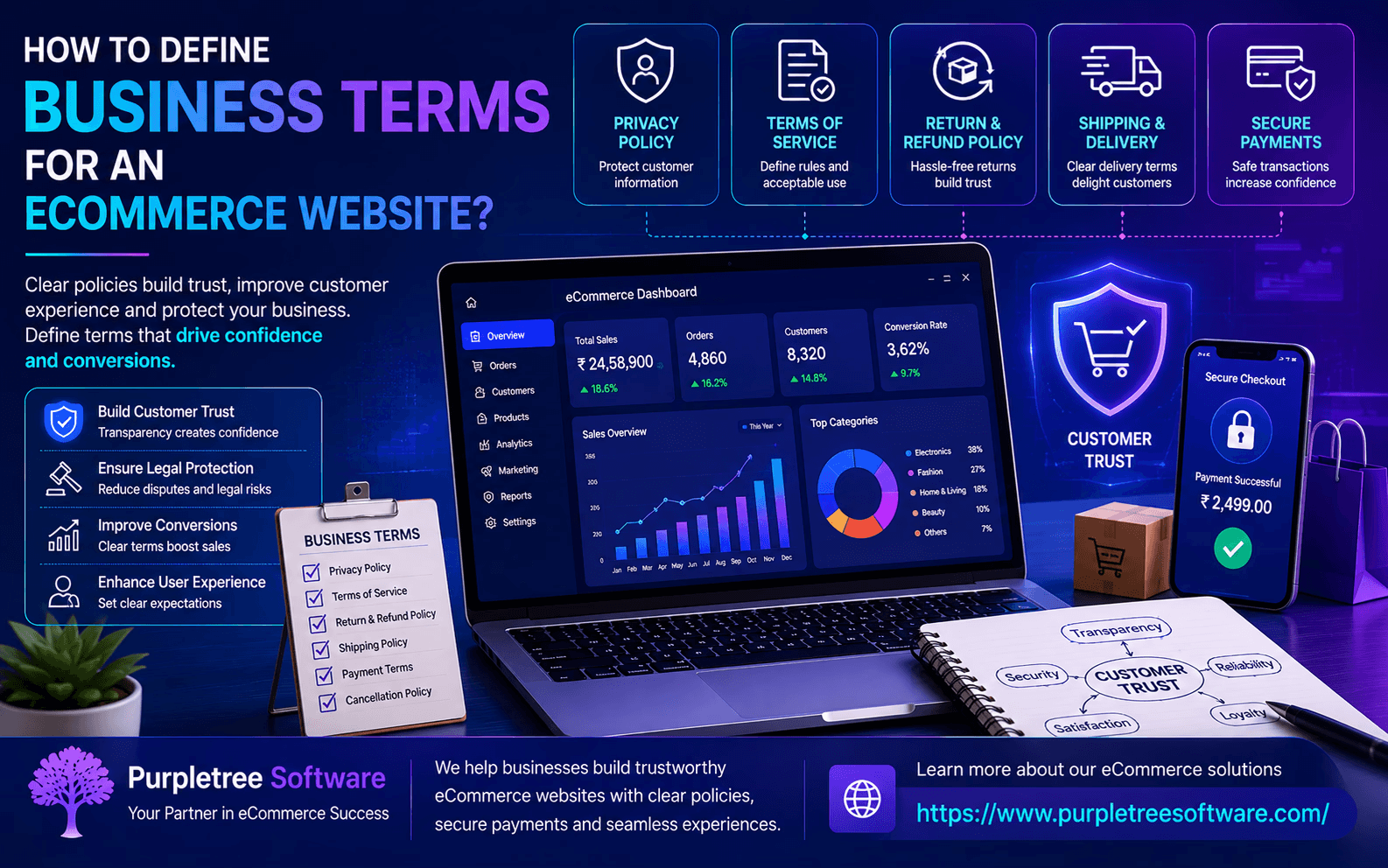
When you start an eCommerce platform, the ultimate objective is to get as much business as possible. Yes, the competition is fierce, and you have hundreds of other websites trying to grab the lion’s share. In such a situation, only that company survives which offers the best terms and conditions to the buyers. It is hard to believe the fact, but most buyers read the terms before making a buying decision.
Research has been done in several countries such as the US and Germany, where customer behaviour was studied about the terms and conditions mentioned on the websites. Astonishingly, about two-thirds of the customers are found reading several terms and policies on one or more websites. Statistics prove that the delivery and return policies are the most widely searched. Payment terms are the second most searched items.
Though there hasn’t been a structured study of it in India, the trend should not be different. Terms and conditions mustn’t be ignored in the backdrop of this when you get a smart and sleek eCommerce platform developed.

Unambiguous, clear-cut policies make your eCommerce platform different.
You must understand that an eCommerce platform needs high trust levels than the conventional Brick and Mortar store. The reason is quite obvious. In the traditional shop, you interact with people in person. In the virtual store, you need to rely on the system. Hence, buyers want to be doubly sure about the terms and conditions they can refer to in case of any mishap.
With a great exchange and return policy, and unambiguous terms and conditions about the privacy, service and refund policies; you can be a differentiator in the competitive arena. They are critical from the point of view of customer satisfaction and a basic building block for your business’s legal security.
Hire an expert to formulate the policies
Jotting down policies and terms & conditions is critically vital. Hence, you can’t afford to take a risk by formulating it your own. Better go for a legal agency or a competent lawyer who has been drafting the same for eCommerce businesses.
Don’t get lured by so-called automated policy generators. They are not suitable for a big eCommerce business like yours. Always consult qualified legal agencies to formulate every line clearly and unambiguously.
Privacy Policy
Being the owner of an eCommerce website, you have to declare that the buyers’ personal information will not be shared without their permission. Remember, it is compulsory to have a privacy policy on the website.
Terms of Service
Terms of service assure the customers that they are not vulnerable to the virus, spammer or other unpleasant content by accessing the eCommerce website design. It has to be explicit, definite and clear.
Returns & Refund
As stated earlier, Refund and Return policies are the most accessed information by customers. Explicitly formulate return and refund policy so that buyers are sure about your website’s authenticity. Thus, they don’t hesitate in making transactions.
Why Business Terms and Policies Matter for Ecommerce Websites
In the ecommerce industry, customer trust plays a critical role in business success. Since customers cannot physically inspect products before purchasing, they rely heavily on website credibility, transparency, and business policies.
Well-defined business terms and conditions help ecommerce businesses establish trust, improve customer confidence, and reduce disputes. Clear policies also protect businesses legally and ensure smoother communication between buyers and sellers.
Businesses developing professional ecommerce platforms with experts like Purpletree Software often focus on creating transparent customer policies that improve user experience and strengthen brand credibility.
Essential Policies Every Ecommerce Website Should Include
A professional ecommerce website should contain multiple legal and operational policies to maintain transparency and compliance.
Shipping and Delivery Policy
Customers always want clarity regarding shipping timelines and delivery procedures. A comprehensive shipping policy should include:
- Estimated delivery time
- Shipping charges
- International shipping availability
- Delivery limitations
- Order tracking details
Transparent delivery terms help reduce customer complaints and improve satisfaction.
Cancellation Policy
A cancellation policy defines the conditions under which customers can cancel orders before shipment or processing.
Clearly mentioning cancellation windows, refund timelines, and applicable charges helps avoid misunderstandings.
Warranty and Product Guarantee Terms
If products come with warranties or guarantees, businesses should clearly explain:
- Warranty duration
- Claim process
- Covered damages
- Exclusions and limitations
This improves buyer confidence and encourages purchases.
Payment Terms and Security Information
Customers expect safe and secure online transactions. Ecommerce websites should clearly mention:
- Accepted payment methods
- Payment processing security
- SSL encryption
- Third-party payment gateway usage
- Fraud protection measures
Secure payment information helps improve trust and conversion rates.
How Clear Policies Improve Ecommerce Conversions
Many businesses underestimate the impact of transparent policies on sales performance. Customers are more likely to complete purchases when policies are easy to understand and accessible.
Clear policies contribute to:
- Higher customer trust
- Reduced cart abandonment
- Better customer retention
- Fewer support queries
- Lower refund disputes
- Improved brand reputation
A professionally designed ecommerce website with clear policy sections creates a smoother customer journey.
Best Practices for Writing Ecommerce Terms and Conditions
Businesses should follow several important practices while creating ecommerce policies.
Use Simple and Clear Language
Avoid overly technical or confusing legal terminology. Policies should be easy for customers to read and understand.
Keep Policies Updated
Business policies should be updated regularly based on operational changes, legal requirements, or customer feedback.
Make Policies Easily Accessible
Policy pages should be visible in:
- Website footer
- Checkout pages
- Product pages
- Customer account sections
Ensure Legal Compliance
Businesses must comply with regional consumer protection and data privacy laws while drafting ecommerce policies.
Role of Professional Ecommerce Development
Modern ecommerce development is not limited to website design alone. Businesses must also focus on user trust, legal transparency, and customer experience optimization.
Experienced ecommerce development companies like Purpletree Software help businesses create scalable ecommerce platforms with professionally structured policy pages, secure checkout systems, responsive user interfaces, and customer-centric functionality.