

Devising a cross-sale strategy for eCommerce business
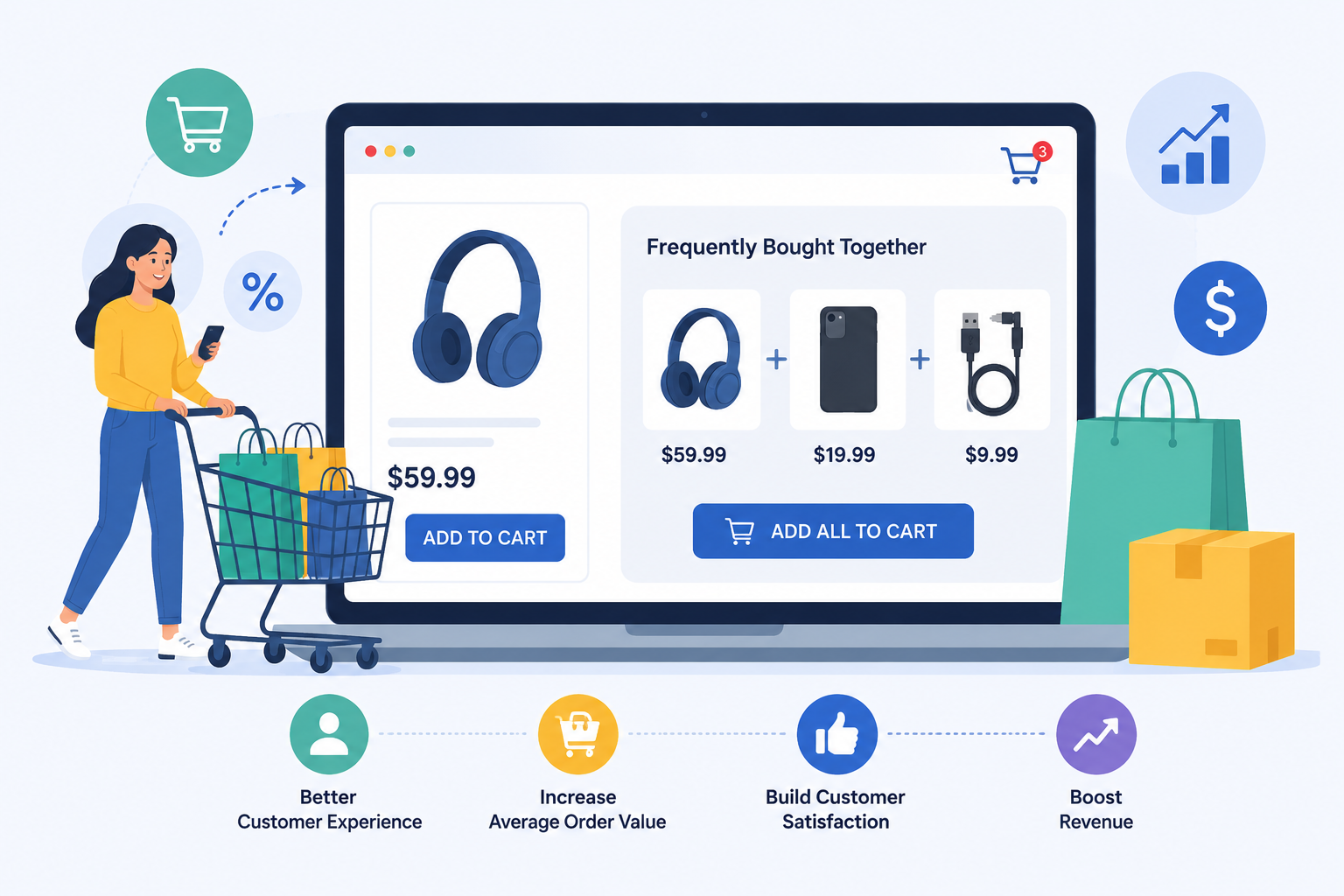
The strategy of Cross-Selling deals with selling our products to your current online consumers. Generally, such products belong to several categories, which fall under the complementary category. Considering its potentials, it is also referred to as battle ready strategy. This has been a tried and tested strategy by food chains and now is also effectively used in the e-commerce sector. In order to sustain in the cutthroat e-commerce market, one has to devise an effective cross sale strategy for the concerned online store.
Let’s check them a few as under:
List out opportunities
Start making a list of all the products you sell online followed by itemizing the same along with the corresponding cross-sell products. Even if you are selling any spare memory card or batteries, the consumer will often require something besides the products he or she is currently buying. Then you can use this list in order to change the product pages as per relevance. Allow your customers to add a number of accessories directly to his or her shopping cart without allowing clicking it over the page.
Monitor the Progress
If possible make sure you track the cross sale on your shopping portal. This is really vital because it will offer you a good return on investment over your cross sale efforts. Such efforts would need a good investment of your time; hence, one has to understand the way the investment is paying off. Unlike taking any other business decision, if you find enough value to your investment, you are supposed to put some efforts in your cross sale activities. The same algorithm, which showcases the cross-sale opportunities, can insert some special hidden codes made in HTML that helps in identifying in cross-sell activities. Once these products are added to the shopping cart, one can easily read the codes in order to monitor the success rate.
Be Natural
Avoid overdoing it! If you are too clear about your cross-sell opportunities, the consumers will certainly feel as though you are treating them to the next sale instead of the human. Your cross sale message should never be coming in this way. Remember the general rule; avoid accessorizing the deals, unless you find the consumers deciding to make the purchase.
Analyze your Current Sales
Make sure you start using the buying date from your current customers in order to help in finding out the cross sale opportunities. Start studying and analyzing the products people have added to their shopping carts and see if you are able to draw any kind of relationship in between these products. Do keep in mind that this may not be plausible if you are not selling the relevant accessory products. If you are in any kind of confusion, you can certainly try the option of polls from your customers along with knowing the cross sale opportunities. You can collect the shopping cart data irrespective of whether the customers have purchased or not. This can give you certain useful insight into the minds of your customer. Using Big Data method can help you in drawing the relationships between different products and help you find the cross-sale opportunities, which you might have missed.
Increasing sales by using online referrals effectively
Why Cross-Selling Is Essential for eCommerce Success
Acquiring new customers often requires significant marketing investment. Cross-selling provides a cost-effective way to increase revenue by encouraging existing customers to purchase complementary products during their buying journey.
When implemented correctly, cross-selling benefits both businesses and customers. Businesses increase their average order value, while customers discover useful products that enhance their original purchase.
Understanding Customer Buying Behavior
Successful cross-selling starts with understanding customer preferences and purchasing patterns.
Analyze Purchase History
Review historical sales data to identify products that are frequently purchased together.
Study Customer Journeys
Examine how customers browse your store, which products they compare, and which items they add to their carts.
Identify Product Relationships
Certain products naturally complement one another. Understanding these relationships helps create more relevant recommendations.
Best Places to Display Cross-Sell Recommendations
The placement of cross-sell suggestions can significantly influence conversion rates.
Product Pages
Display related products that enhance the primary item being viewed.
Shopping Cart Pages
Suggest complementary items before customers proceed to checkout.
Checkout Process
Provide carefully selected recommendations without disrupting the purchasing experience.
Post-Purchase Emails
Recommend relevant products based on completed orders to encourage repeat purchases.
Use Product Bundles to Increase Value
Product bundles simplify purchasing decisions and often encourage customers to spend more.
Examples include:
- Electronic devices with accessories
- Fashion products with matching items
- Home improvement kits
- Office equipment bundles
- Health and fitness packages
Bundling also helps businesses move inventory more efficiently while providing added value to customers.
Personalization Improves Cross-Selling Results
Modern ecommerce stores can use customer data to personalize recommendations.
Behavior-Based Recommendations
Suggest products based on browsing history and previous purchases.
Category-Based Suggestions
Offer products that belong to related categories.
Seasonal Recommendations
Promote complementary products relevant to holidays, events, or seasonal trends.
Personalized recommendations generally achieve higher engagement and conversion rates than generic suggestions.
Leverage Artificial Intelligence and Data Analytics
Advanced ecommerce platforms increasingly use artificial intelligence to improve cross-selling effectiveness.
AI-powered recommendation engines can:
- Analyze customer behavior in real time
- Predict purchase intent
- Generate dynamic product suggestions
- Improve recommendation accuracy over time
These technologies help businesses maximize sales opportunities while improving customer satisfaction.
Common Cross-Selling Mistakes to Avoid
Cross-selling can be highly effective, but poor implementation may frustrate customers.
Avoid:
Irrelevant Recommendations
Only suggest products that genuinely complement the customer's purchase.
Too Many Suggestions
Excessive recommendations can overwhelm visitors and reduce conversion rates.
Aggressive Sales Messaging
Cross-selling should feel helpful rather than pushy.
Ignoring Customer Preferences
Use data and insights to ensure recommendations align with customer interests.
Measuring Cross-Selling Performance
Monitoring performance helps refine and improve your strategy.
Key metrics include:
- Average order value (AOV)
- Cross-sell conversion rate
- Revenue per visitor
- Cart abandonment rate
- Repeat purchase rate
- Customer lifetime value
Regular analysis allows businesses to optimize recommendation strategies and maximize returns.
Benefits of a Strong Cross-Selling Strategy
An effective cross-sale strategy can deliver multiple business benefits:
- Increased revenue
- Higher average order values
- Better inventory utilization
- Improved customer experience
- Increased repeat purchases
- Stronger customer loyalty
When customers receive valuable product recommendations, they are more likely to trust and return to your store.
Conclusion
Cross-selling remains one of the most effective ecommerce growth strategies. By understanding customer behavior, offering relevant recommendations, leveraging analytics, and continuously optimizing performance, businesses can significantly increase revenue while delivering a better shopping experience. A thoughtful cross-sale strategy transforms every transaction into an opportunity for greater customer value and long-term business growth.