

Optimizing your eCommerce store
With the advent of Smartphone devices and tablets, an increasing amount of internet users is seen accessing the web using these devices. As per the latest reports of Google, more than 57 % of mobile users will avoid visiting the sites, which take more than three seconds to load and 30 % of users will shelve the idea of buying if the shopping portal is not optimized as per these devices. In other words, the sites, which are not optimized as per these modern day devices are more likely to lose sales. Thus the importance of having an optimized e-commerce store cannot be denied.
Mobile Users are Different
The mobile users are known to have different objectives than the PC users. They typically want the information quickly and without any hassle and digestible bites. As per some statistics, mobile users invest more time and money per purchase than consumers carry on desktop websites. This boosts up the importance of optimizing your websites for mobile users. So, right from making the inquiry to purchase, you are supposed to design the site, which not only loads fast but also in a right manner.
High Traffic with Optimization
As one-quarter of global web searches are carried out using mobile devices with more than one billion users all across the world, having a website designed for these platforms have become simply important than the traditional versions. As per multiple sources, the mobile users are engaging with mobile portals and apps more than the traditional versions while watching different videos, TV, and other things while at work or in other places. Even Google in its last year’s update popularly known as Hummingbird update, having responsive designs for the website is important for better rankings on search engines.
Smarter Brand Engagement
People like your e-commerce portal only when you offer them satisfying mobile experience and they will more likely return to your site later using their desktops. More than 90 percent of users report moving between different devices or screens in order to accomplish any task. Once your mobile experience is optimized for consistency and functionality, it helps in building up the trust and affinity with the users. On the contrary, if your mobile website design has a complex navigation, the users will find it difficult to access your site with ease. At such junctures, no one would like to visit your site using their desktop. If you are keen to engage your target audience with your brand then it is important to have a responsive design for your eCommerce site.
Check Mobile Health of your eCommerce Site
Pick up any Smartphone or tablet and start checking your website in order to check the performance of your website. As you visit your website, check whether your site is able to load in less than three seconds. Are you able to draw your eyes to the key message or selling points? Do you find your website simple to navigate? Check the call to action, user experience, and content. Once you get the honest answers to these questions, you end up understanding the importance of optimizing your site for mobile users.
How to convert your eCommerce traffic into paying customers
Why eCommerce Store Optimization Matters
In today's competitive digital marketplace, simply having an online store is not enough. Customers expect fast-loading pages, seamless navigation, mobile-friendly experiences, and secure checkout processes. An optimized eCommerce store helps businesses improve customer satisfaction, increase search engine visibility, and generate more sales.
Store optimization is an ongoing process that focuses on improving performance, usability, and conversion rates across all devices and customer touchpoints.
Website Speed: The Foundation of User Experience
Faster Loading Improves Conversions
Customers expect websites to load almost instantly. Research consistently shows that even a small delay in page load time can significantly impact sales.
Benefits of faster websites include:
- Lower bounce rates
- Higher customer engagement
- Improved search rankings
- Better conversion rates
Tips to Improve Website Speed
Consider implementing:
- Image optimization
- Browser caching
- Content delivery networks (CDN)
- Code minification
- Optimized hosting infrastructure
These improvements help create a smoother shopping experience.
Mobile Optimization Is No Longer Optional
Mobile Commerce Continues to Grow
A large percentage of online shopping now occurs on smartphones and tablets. Mobile users often browse products, compare prices, and complete purchases directly from their devices.
An optimized mobile experience should include:
- Responsive design
- Fast page loading
- Easy navigation
- Mobile-friendly checkout
- Touch-friendly buttons
Responsive Design Benefits
Responsive websites automatically adapt to different screen sizes, ensuring a consistent user experience across:
- Smartphones
- Tablets
- Laptops
- Desktop computers
Responsive design also supports better search engine rankings.
Improve Navigation and Product Discovery
Simplify Site Navigation
Customers should be able to find products quickly and easily.
Best practices include:
- Clear menu structures
- Logical product categories
- Breadcrumb navigation
- Product filters
- Search functionality
Enhance Product Search
Advanced search features help customers locate products faster.
Useful features include:
- Auto-suggestions
- Predictive search
- Category filters
- Attribute-based filtering
Better product discovery often leads to higher conversion rates.
Optimize Product Pages for Better Sales
Use High-Quality Images
Product images play a critical role in purchasing decisions.
Best practices include:
- Multiple product views
- Zoom functionality
- Consistent image quality
- Optimized file sizes
Write Detailed Product Descriptions
Well-written descriptions help customers understand:
- Product features
- Benefits
- Specifications
- Usage information
Detailed content also supports SEO efforts.
Strengthen Your eCommerce SEO Strategy
Optimize for Search Engines
SEO helps attract organic traffic and reduce dependence on paid advertising.
Important SEO elements include:
- Optimized title tags
- Meta descriptions
- Internal linking
- Keyword-rich content
- Structured data
Create Valuable Content
Content marketing can improve search visibility while educating customers.
Examples include:
- Buying guides
- Product comparisons
- Industry trends
- How-to articles
- FAQs
Build Customer Trust and Confidence
Display Security Indicators
Customers need reassurance that their information is protected.
Trust-building elements include:
- SSL certificates
- Secure payment badges
- Privacy policies
- Return policies
Showcase Reviews and Testimonials
Customer reviews help build credibility and influence purchasing decisions.
Benefits include:
- Increased trust
- Improved conversions
- Better customer engagement
Optimize the Checkout Process
Reduce Cart Abandonment
A complicated checkout process is one of the leading causes of abandoned carts.
Ways to improve checkout include:
- Guest checkout options
- Fewer form fields
- Multiple payment methods
- Clear shipping information
Provide Payment Flexibility
Offering multiple payment options increases convenience and supports broader customer preferences.
Leverage Analytics and Customer Data
Monitor User Behavior
Analytics tools provide insights into:
- Visitor behavior
- Conversion paths
- Popular products
- Cart abandonment rates
Make Data-Driven Improvements
Regular analysis helps businesses identify optimization opportunities and improve performance over time.
Improve Customer Retention
Acquiring customers is important, but retaining them is often more profitable.
Email Marketing
Stay connected with customers through:
- Promotional campaigns
- Product updates
- Personalized recommendations
- Loyalty rewards
Loyalty Programs
Reward programs encourage repeat purchases and increase customer lifetime value.
Future Trends in eCommerce Optimization
Artificial Intelligence
AI is helping businesses deliver:
- Personalized recommendations
- Predictive analytics
- Intelligent search experiences
Voice Commerce
Voice search optimization is becoming increasingly important as voice-enabled devices continue to grow in popularity.
Omnichannel Experiences
Customers expect seamless shopping experiences across websites, mobile apps, social media platforms, and physical stores.
Frequently Asked Questions
Why is eCommerce optimization important?
Optimization improves website performance, user experience, search visibility, and conversion rates, ultimately helping businesses generate more revenue.
How does mobile optimization affect sales?
Mobile-friendly websites provide better user experiences, which can increase engagement, reduce bounce rates, and improve conversions.
Does website speed impact SEO?
Yes. Search engines consider website speed as a ranking factor, and faster websites generally provide better user experiences.
What is the most important part of eCommerce optimization?
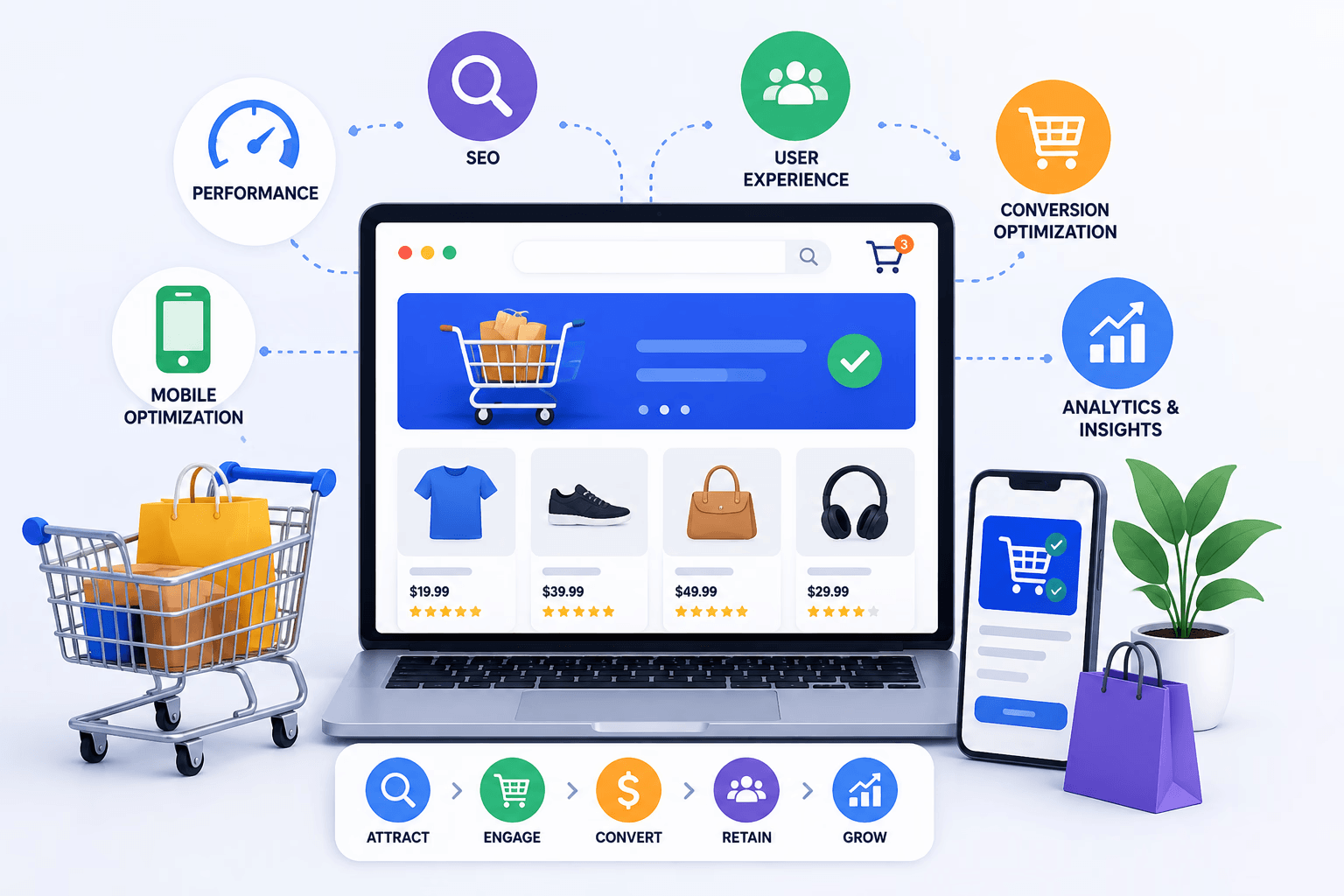
A combination of website speed, mobile responsiveness, user experience, SEO, and checkout optimization is essential for long-term success.
How to Convert Your eCommerce Traffic into Paying Customers
Attracting visitors to your online store is only half the battle. The real goal is converting those visitors into paying customers. To improve conversion rates, focus on creating a seamless customer journey from product discovery to checkout.
Use Clear Calls-to-Action
Every product page should guide visitors toward a purchase decision with prominent and persuasive calls-to-action such as:
- Add to Cart
- Buy Now
- Request a Quote
- Get More Information
Create Urgency and Trust
Strategic elements can encourage faster purchasing decisions:
- Limited-time offers
- Low stock notifications
- Customer reviews
- Secure payment badges
- Money-back guarantees
Personalize the Shopping Experience
Personalization can significantly improve conversions by showing customers products and offers relevant to their interests.
Examples include:
- Recommended products
- Recently viewed items
- Personalized discounts
- Targeted email campaigns
Retarget Abandoned Visitors
Not every visitor will purchase immediately. Retargeting campaigns help bring potential customers back to complete their purchase.
Popular methods include:
- Email reminders
- Remarketing advertisements
- Special discount offers
- Cart recovery campaigns
Conclusion
Optimizing your eCommerce store is essential for attracting visitors, improving customer experiences, and increasing sales. By focusing on mobile responsiveness, website speed, SEO, user experience, and conversion optimization, businesses can create a store that not only attracts traffic but successfully converts visitors into loyal customers. Continuous optimization ensures your online store remains competitive and prepared for future growth.