

Technology Options for Developing Hybrid Mobile Application for eCommerce
Thursday, 13 November 2014 |Written by Purpletree |

A hybrid mobile app refers to a native mobile application that is developed with the help of technologies other than the indigenous SDKs for platforms such as Android, iOS, Blackberry, and Windows. Implementing the best of both the worlds (native + Web), it is a downloadable native app running a part or whole of its interface in a rooted browser section.
The hybrid app model facilitates an efficient and effortless entry into the new and dynamic HTML5 world due to which more and more e-commerce businesses are considering it. For the developers, rather than rewriting the app for each platform, it becomes essential to write some application code in JavaScript and HTML to be reused across all platforms and phones.
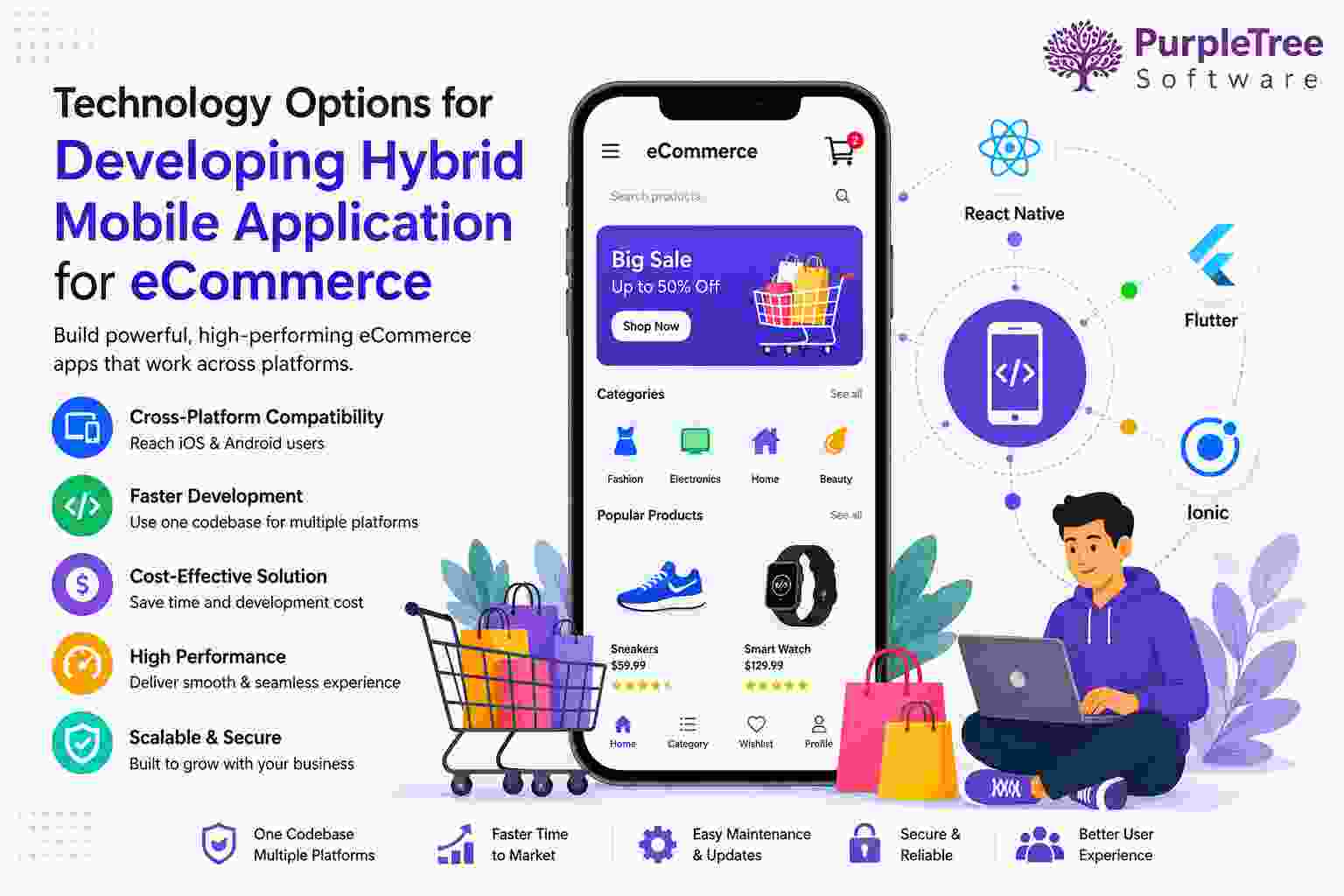
Developing a mobile e-commerce hybrid application typically involves the use of several web-based technologies, a few of which are mentioned above. Practically, a number of frameworks tend to help in using these coding languages and scripts, which encompass a kind of wrapper or compiler for converting common code into a native application. Let us look at some of the most commonly used frameworks or technology options in use for developing hybrid mobile e-commerce app.
Apache Cordova
The secret but the core of a hybrid model is the employment of an abstraction layer exposing the functionality of the device to the hybrid app in the form of a JavaScript API. In the case of mobile Web implementation, this is something not possible due to the security rim between the device APIs and browser. Therefore, facilitating frameworks have made it possible and one such instance is Apache Cordova.
It is an example of a JavaScript abstraction layer that exposes a common APIs set in JavaScript, which tend to work on any device that the framework supports. Cordova supports seven platforms including iOS, Windows Phone 7, Blackberry, and Android. When the indigenous wrapper gets compiled around the JavaScript, HTML, and CSS resources, an interop layer links the JavaScript APIs with the APIs that are platform specific.
Donated to Apache, the Cordova code base is a popular hybrid framework using a native wrapper and is developed chiefly with Web technologies. It also has a JavaScript bridge as plug-ins built into the native functionality.
PhoneGap
Built on Apache Cordova, PhoneGap offers a remote building interface for integrating and emulating an application in the cloud. It is an ideal choice for remote development of hybrid mobile e-commerce apps for a sole mobile platform.
Ionic
This one is a free and open source framework featuring a collection of mobile-optimized JavaScript, CSS, and HTML components and tools for developing highly interactive hybrid apps. It has been designed using Sass and optimizes AngularJS for delivering robust apps. Because Ionic is modeled on native mobile SDKs, it is easy to explore for all those who have built native mobile apps for Android or iOS.
Appcelerator
This is another leading framework for using JavaScript and SDKs to design hybrid apps. The biggest benefit of using Appcelerator is maximum access to APIs and native interface widgets.
No matter which one you choose, the aforementioned frameworks facilitate varying levels of access to the functionality of the native device. You only need to choose them on the basis of supporting languages you need.
Why you need a mobile application for your eCommerce store
Why Hybrid Mobile Applications Are Popular in eCommerce
The growth of mobile commerce has encouraged businesses to invest heavily in mobile applications. Customers expect fast, convenient, and personalized shopping experiences directly from their smartphones. However, developing separate native applications for Android and iOS can significantly increase development costs and maintenance efforts.
Hybrid mobile applications solve this challenge by allowing developers to create a single codebase that works across multiple platforms. This approach reduces development time, lowers costs, and accelerates time-to-market for eCommerce businesses.
Understanding Hybrid Mobile App Development
A hybrid mobile application combines web technologies with native mobile capabilities.
Typically, hybrid apps are built using:
- HTML5
- CSS3
- JavaScript
- Modern frontend frameworks
The application is then wrapped within a native container that allows it to access device functionality such as:
- Camera
- GPS
- Push notifications
- File storage
- Device sensors
This creates a balance between development efficiency and native functionality.
Key Benefits of Hybrid eCommerce Applications
Faster Development
Using a shared codebase allows developers to build applications for multiple platforms simultaneously.
Benefits include:
- Reduced development effort
- Faster project delivery
- Simplified maintenance
Cost Efficiency
Businesses can avoid maintaining separate Android and iOS development teams.
This significantly reduces:
- Development costs
- Testing expenses
- Long-term maintenance costs
Wider Market Reach
A single hybrid application can serve users across:
- Android devices
- iPhones
- Tablets
- Multiple operating systems
This helps businesses maximize audience reach.
Apache Cordova
Apache Cordova remains one of the foundational technologies in hybrid app development.
Key Features
- Open-source framework
- JavaScript API access
- Cross-platform support
- Device hardware integration
Advantages for eCommerce
Cordova enables mobile commerce applications to access:
- Cameras for product scanning
- Geolocation services
- Push notifications
- Local storage capabilities
This makes it suitable for many retail and shopping applications.
PhoneGap
PhoneGap was built on top of Apache Cordova and simplified hybrid application development.
Benefits
- Cloud-based build services
- Faster prototyping
- Easy deployment
- Cross-platform compatibility
PhoneGap became popular because it simplified the process of building applications without requiring deep native development expertise.
Ionic Framework
Ionic is one of the most widely adopted hybrid application frameworks.
Why Developers Prefer Ionic
Ionic provides:
- Mobile-optimized UI components
- Excellent user experience
- Responsive design capabilities
- Strong community support
eCommerce Advantages
For online stores, Ionic enables:
- Beautiful product catalogs
- Smooth navigation
- Interactive shopping experiences
- Fast mobile interfaces
Its component-based architecture makes development highly efficient.
Appcelerator Titanium
Appcelerator focuses on creating native-like applications using JavaScript.
Key Benefits
- Native user interface components
- Strong performance
- Device API access
- Enterprise-grade capabilities
Suitable Use Cases
Businesses requiring deeper integration with device functionality may benefit from Appcelerator's approach.
Modern Cross-Platform Alternatives
The hybrid development landscape has evolved significantly over the years.
React Native
React Native has become a preferred option for many eCommerce businesses.
Advantages include:
- Near-native performance
- Large developer community
- Reusable codebase
- Rich ecosystem
Flutter
Flutter has gained significant popularity because of:
- High performance
- Beautiful UI capabilities
- Fast development cycles
- Strong cross-platform support
Many modern eCommerce startups choose Flutter for mobile application development.
Choosing the Right Framework
Consider Business Requirements
Before selecting a framework, evaluate:
- Budget
- Timeline
- Target audience
- Required features
- Long-term maintenance
Evaluate Development Resources
The availability of skilled developers often influences framework selection.
Popular frameworks generally offer:
- Better community support
- Extensive documentation
- Larger talent pools
Essential Features for eCommerce Hybrid Apps
Product Catalog Management
The application should provide:
- Fast product browsing
- Advanced filtering
- Search functionality
- Personalized recommendations
Secure Payment Integration
Support for multiple payment methods is essential.
Examples include:
- UPI
- Credit cards
- Digital wallets
- Net banking
Push Notifications
Push notifications help increase engagement through:
- Promotional campaigns
- Order updates
- Cart recovery reminders
Customer Accounts
Features should include:
- User profiles
- Order history
- Wishlist management
- Saved payment methods
Performance Considerations
Optimize Application Speed
Fast performance remains critical for customer satisfaction.
Best practices include:
- Lazy loading
- Image optimization
- Efficient API calls
- Caching strategies
Minimize Resource Usage
Efficient resource management improves application responsiveness across devices.
Security Best Practices
Protect Customer Data
Hybrid applications should implement:
- Data encryption
- Secure authentication
- HTTPS communication
- Secure payment processing
Compliance and Privacy
Businesses must ensure compliance with applicable privacy regulations and security standards.
Backend Integration
API-Driven Architecture
Modern hybrid applications rely heavily on APIs for communication with backend systems.
Integrations often include:
- eCommerce platforms
- ERP systems
- CRM solutions
- Inventory management systems
Real-Time Synchronization
Customers expect accurate information regarding:
- Product availability
- Pricing
- Order status
- Delivery tracking
Backend synchronization ensures data consistency across channels.
Future Trends in Hybrid eCommerce Development
Progressive Web Apps (PWAs)
PWAs combine web and mobile app capabilities while reducing installation barriers.
Artificial Intelligence
AI-powered features are enhancing:
- Product recommendations
- Customer support
- Search experiences
- Personalization
Headless Commerce
Headless architectures allow mobile applications to interact with backend services more flexibly and efficiently.
Voice Commerce
Voice-enabled shopping continues to gain adoption among mobile users.
Frequently Asked Questions
What is a hybrid mobile application?
A hybrid mobile application combines web technologies with native mobile functionality and can run across multiple operating systems using a shared codebase.
Is Ionic good for eCommerce applications?
Yes. Ionic provides excellent UI components, responsive design capabilities, and strong performance for eCommerce applications.
What is the difference between native and hybrid apps?
Native apps are built specifically for one platform, while hybrid apps use a shared codebase that supports multiple platforms.
Which framework is best for modern eCommerce mobile applications?
The choice depends on business requirements, but Ionic, React Native, Flutter, and Apache Cordova remain among the most popular options.
Conclusion
Hybrid mobile application development offers a practical and cost-effective solution for eCommerce businesses looking to reach customers across multiple devices and operating systems. Technologies such as Apache Cordova, Ionic, PhoneGap, Appcelerator, React Native, and Flutter provide flexible options depending on business requirements. By choosing the right framework and focusing on performance, security, and user experience, businesses can build powerful mobile commerce applications that support long-term growth and customer engagement.