

Tips for eCommerce Platform Migration
Saturday, 20 September 2014 | Written by Purpletree |
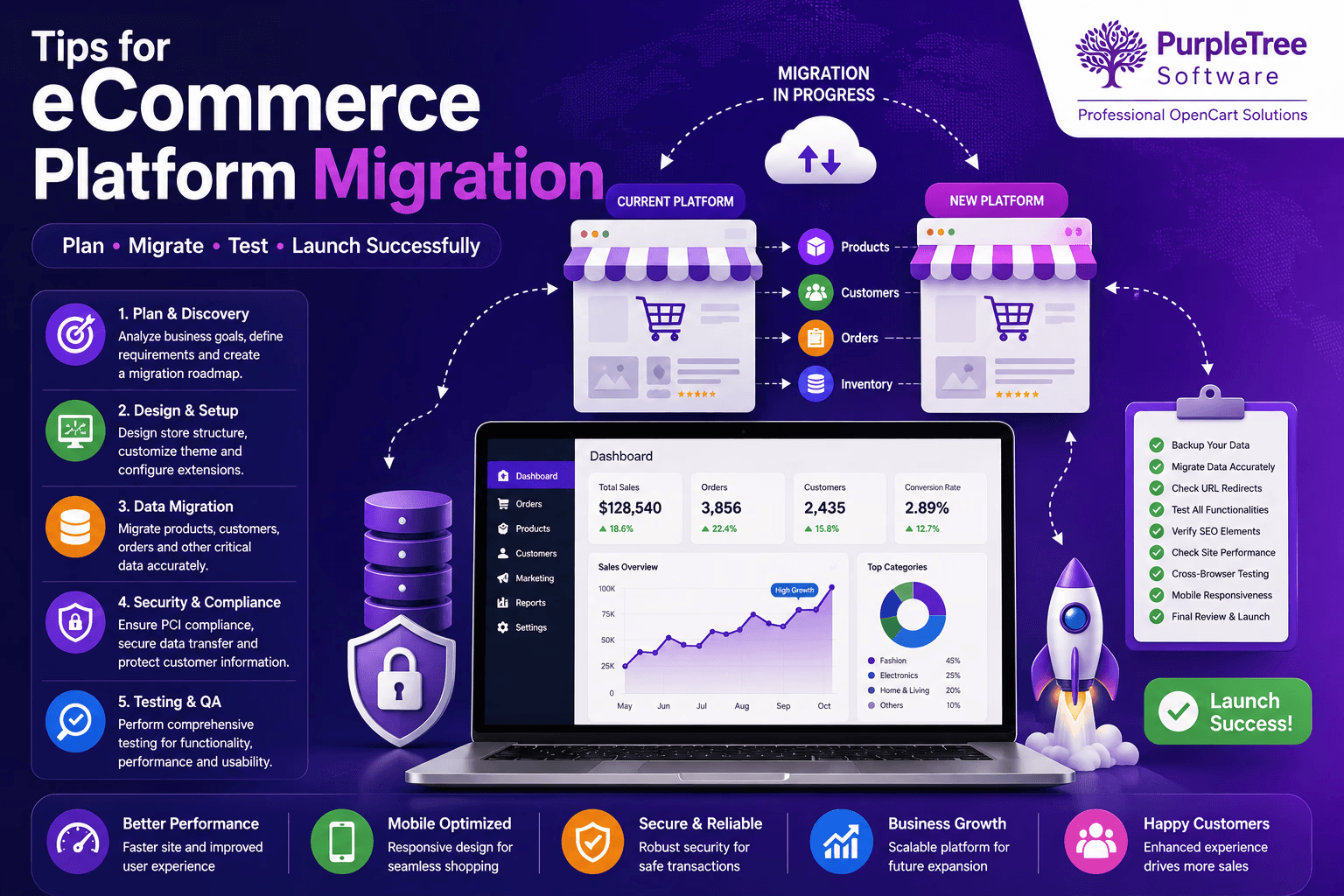
Migrating your existing store to another ecommerce platform is much like moving a brick-and-mortar shop. It requires meticulous consideration and planning that takes care of several critical areas or elements for ensuring at least the same or superior user experience. Here are these basic elements to consider, which are common irrespective of source and destination carts of migration.
Discovery
This is where all information is collected to understand the requirements for a new store. A critically wide review of the present business processes is done keeping the future goals in mind. The focus is usually on scale of data migration. You will usually define the features along with the extra capabilities required after the initial deployment. The result of this process is a new system design specification acting as a blueprint for developers striking a balance between customer needs and business goals.
Design
Well, this is exactly where you come up with the store structure having catalogues, order forms, and navigation options. Here, you need to look for a fully flexible, unique, and customized store design so that it reflects your brand as well as the requirements of your customers.
This is also the time to make some visual decisions such as what will be the color theme, how the products shall be arranged, where the signage will be, how navigation will be, how checkout will happen, and what will come in window display. Remember, it is design that renders your online store its character, attracts old and new customers, and persuades them to buy from your store. Therefore, it should be capable of rendering a supreme user experience for helping your customers to get what they want.
Consider redesigning your logo or modifying the store settings in this phase. The latter is essential to adapt with the changed platform and templates. As a tip, explore within the new platform, watch some migration videos, and read some e-books for getting acquainting with the new cart.
Data Relocation
This is perhaps the most crucial task wherein you identify data for migration to the new store. It basically includes importing your products and orders along with customer details, enriched product catalogue, and updates to servers. The result of this step is the catalog architecture definition.
Security
This is another critical aspect to consider for migrating to any new platform. Your new store should be such that it makes it easier to accomplish PCI compliance. Further, any updates you perform on the platform should not affect this compliance. You will also have to create and implement a security policy for daily operations, in terms of privileges for updating different data such as of products and orders.
Quality Assurance
This is assured through thorough testing done at the stage of deployment. The testing areas normally cover functional, conformance, and compatibility. The tester needs to be check compatibility with configurations, browsers, and operating systems as per the migration scope defined in the discovery phase. Moreover, at the time of going live, proper technical support must be ensured by the new platform for dealing with any last-moment issues.
Evaluate Your Current Platform's Limitations
Before migrating to a new ecommerce platform, it is important to identify the limitations of your existing solution. Understanding these challenges helps ensure that the new platform addresses current pain points while supporting future growth.
Common reasons businesses migrate include:
- Slow website performance
- Limited customization options
- Difficulty managing large product catalogs
- Lack of integration capabilities
- Poor mobile shopping experience
- Security and compliance concerns
A detailed assessment helps create a migration roadmap that aligns with long-term business goals.
Build a Future-Proof Migration Strategy
Successful ecommerce migration is not just about moving data from one system to another. It involves preparing your business for future expansion and technological advancements.
Define Business Objectives
Establish clear goals for the migration project, such as:
- Increasing conversion rates
- Improving website speed
- Enhancing customer experience
- Expanding product offerings
- Supporting multi-store operations
Identify Essential Integrations
Review all third-party services connected to your current store, including:
- Payment gateways
- Shipping providers
- CRM systems
- Marketing automation tools
- ERP and inventory management software
Ensuring compatibility with the new platform helps avoid operational disruptions after launch.
Protect SEO Value During Migration
Search engine visibility is one of the most valuable assets of an established ecommerce store. Improper migration can result in significant traffic losses.
Preserve High-Performing Pages
Identify pages that generate the most organic traffic and ensure they are migrated correctly.
Maintain Internal Linking Structure
Strong internal links help search engines understand your website architecture and distribute authority effectively.
Update XML Sitemaps
Generate and submit new XML sitemaps after migration to help search engines discover updated URLs quickly.
Monitor Rankings Post-Migration
Track keyword rankings and organic traffic closely during the weeks following launch to identify and address issues early.
Optimize Product Data Before Migration
Migration presents an excellent opportunity to improve catalog quality.
Consider reviewing:
- Product titles
- Product descriptions
- Category structure
- Product images
- Meta information
- Product attributes
Clean and optimized product data improves both customer experience and search engine performance.
Prepare Customers for the Transition
Communication plays a crucial role in reducing confusion during migration.
Inform customers about:
- Planned maintenance windows
- Expected improvements
- New features and functionality
- Account migration procedures
Transparent communication builds trust and minimizes support requests.
Performance Optimization for the New Platform
A new ecommerce platform should deliver measurable performance improvements.
Improve Page Load Speed
Fast-loading websites provide better user experiences and often achieve higher conversion rates.
Optimize Mobile Shopping
Mobile commerce continues to dominate online sales. Ensure the migrated store delivers a seamless experience across all devices.
Implement Advanced Caching
Caching technologies can significantly improve website performance and server efficiency.
Use Scalable Infrastructure
Choose hosting and infrastructure capable of supporting future traffic growth and seasonal sales spikes.
Create a Post-Launch Success Plan
The migration process continues even after the new store goes live.
Review Analytics Data
Monitor visitor behavior, bounce rates, and conversion funnels.
Verify Customer Journeys
Test key workflows such as:
- Product search
- Cart management
- Checkout
- Account registration
- Order tracking
Collect Customer Feedback
Direct customer feedback can reveal usability issues that internal testing may miss.
Schedule Continuous Improvements
Regular updates and optimizations help maximize the long-term value of your migration investment.
Common eCommerce Migration Mistakes to Avoid
Many migration projects face challenges because of preventable mistakes.
Avoid:
- Migrating without a detailed plan
- Ignoring SEO considerations
- Skipping data validation
- Insufficient testing
- Poor communication with customers
- Launching without performance monitoring
A proactive approach can significantly reduce risks and improve project outcomes.
Conclusion
eCommerce platform migration is a strategic investment that can transform the growth potential of an online business. By focusing on planning, SEO preservation, data accuracy, customer experience, and post-launch optimization, businesses can successfully transition to a new platform while minimizing risks. A carefully executed migration not only improves operational efficiency but also creates a stronger foundation for future ecommerce success.