

Using eCommerce frameworks for catalog websites
Saturday, 22 March 2014 | Written by Purpletree |
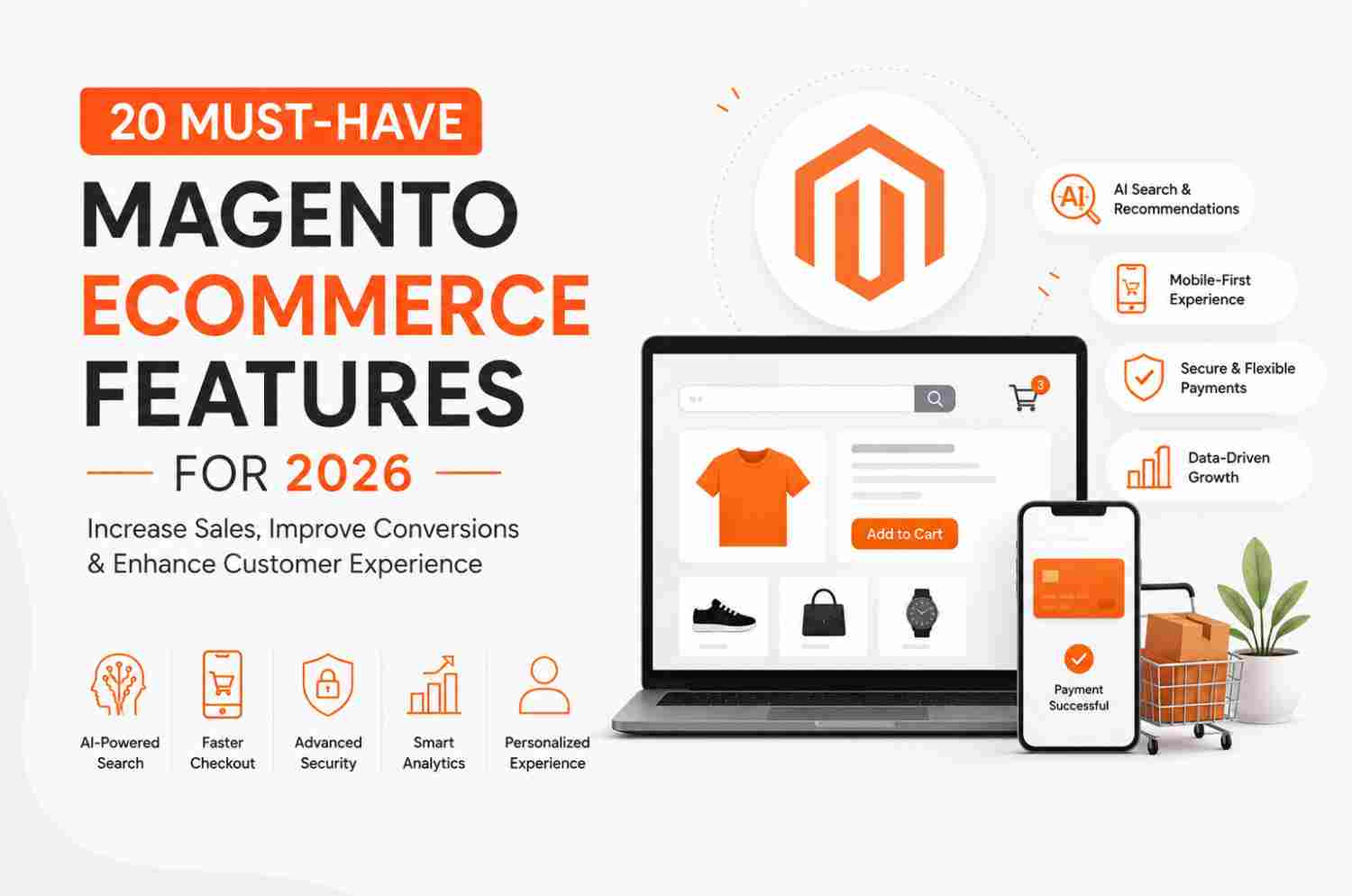
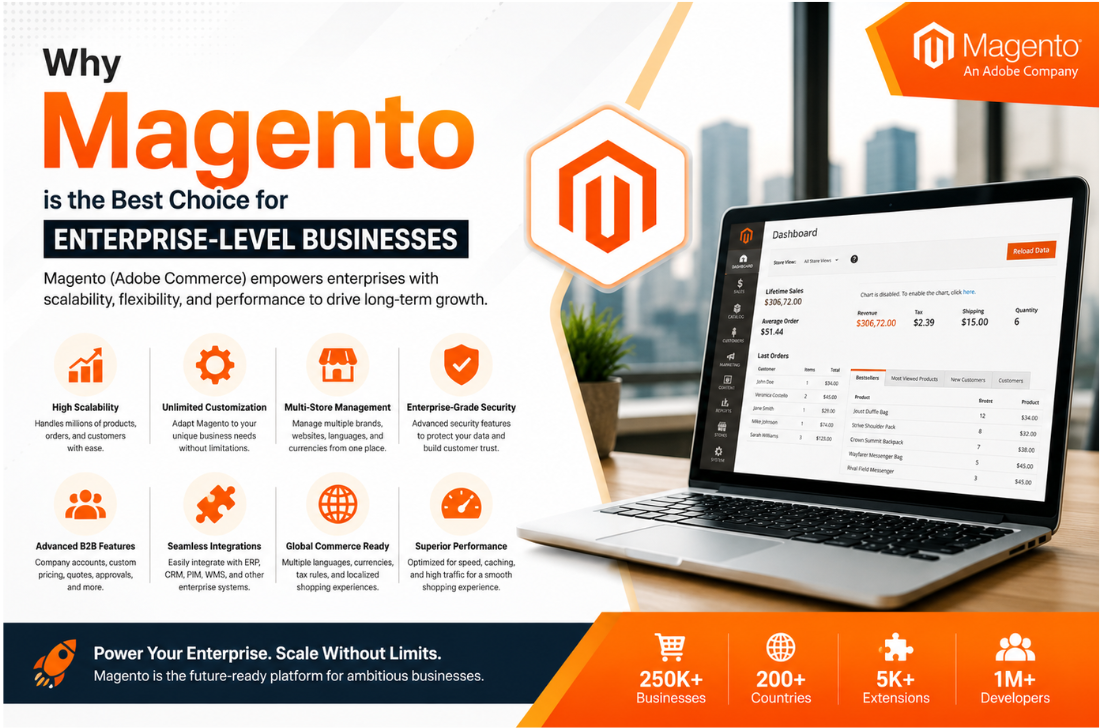
There are different kinds of eCommerce framework available which are extremely beneficial for making different types of websites. If you are intended to make a catalog website, Magneto platform is worth choosing the option. It provides the scalability, flexibility and valuable features that will speed up the process of your business growth. Moreover, Magneto provides the feature-rich e-commerce platforms providing merchants with complete flexibility and control over content, presentation, and performance of their online channels. It is one of the good e-commerce frameworks that won’t let your process of creating catalog websites down and with little effort, you’ll be having a full-fledged e-commerce platform with complete functionality and outstanding performance.
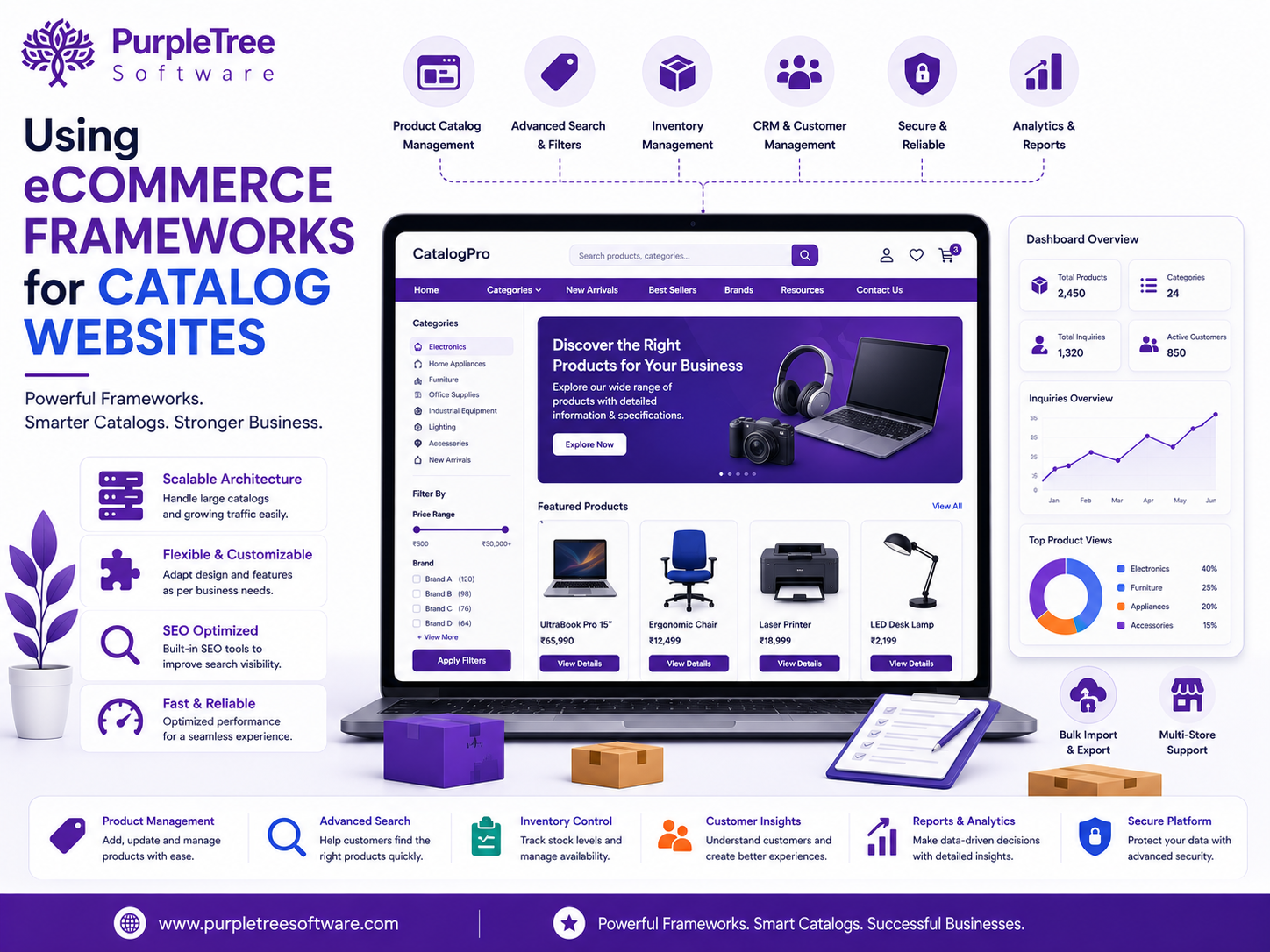
With the help of this eCommerce framework, you will be able to manage fully dynamic catalog with its intuitive interface. Its flexible catalog system holds different options for items’ display. On the other hand, you can also import and export products for offline batch updates. Its core API permits you to integrate via web services with existing back-offline structures that ensure more efficient management of your online channel.
By using this ecommerce framework, you can perform inventory management tasks with background items while utilizing minimum and maximum quantities. Along with this working freedom, you are permitted to get batch updates for the products that you will receive in your admin panel. There are attribute sets which actually allow you to create products of any kind you want. What if you want to create store-specific attributes on the fly? Surely, you can easily perform this task with this excellent ecommerce platform.
Including all these described benefits, there are still a number of others need to be discussed. One of the biggest advantages of using these frameworks is high performance. These platforms are dedicated to delivering the highest performance as they employ the fastest data structures by providing the highly optimized code base. Ecommerce frameworks are competent enough that try to minimize dependencies between different implementation domains.
For making an expert level catalog website, ecommerce platforms are productive enough as these are hassle-free. These platforms are promised to develop a broad development perspective of e-commerce benefits. You will find each and everything included in these podiums that you need to set up your online store. You can give your customers space to write comments and specify options when they will pay for the items on your ecommerce website. Moreover, tracking online store orders and its status become easier with such frameworks. They allow you to keep track of all orders that have been paid for, delivered or shipped.
To enhance the functionality of your catalog website, there are features included in ecommerce platforms like CRM. With the help of this feature, you can view detailed information about who placed the order. Moreover, these systems are also loaded with the fraud detection systems that are ready to warn you in case any suspicious order is detected on your site. Hence, using an ecommerce platform, you can not only make you catalog website perfectly running but stay away from any fraudulent activities as well.
Why Catalog Websites Are Important for Modern Businesses
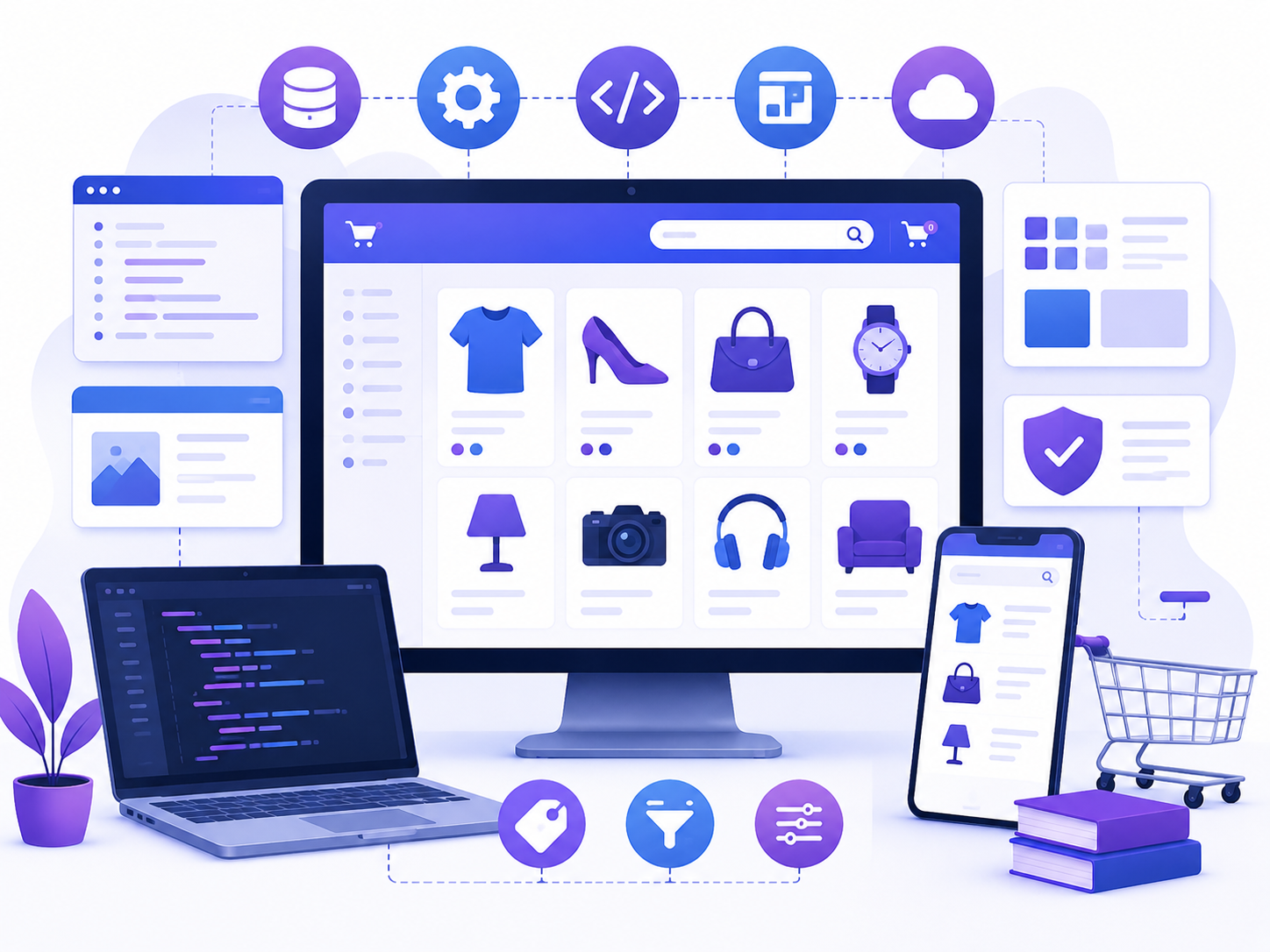
A catalog website serves as a digital showcase of products and services without necessarily requiring direct online purchases. Many manufacturers, wholesalers, distributors, and B2B companies use catalog websites to present product information, specifications, pricing inquiries, and business solutions to potential customers.
By utilizing modern eCommerce frameworks, businesses can create highly organized and scalable catalog websites that improve customer engagement and simplify product management.
Benefits of Using eCommerce Frameworks for Catalog Websites
Efficient Product Management
One of the biggest advantages of using an eCommerce framework is the ability to manage large product catalogs efficiently.
Businesses can easily:
- Add new products
- Update product details
- Manage categories
- Upload product images
- Maintain product specifications
This centralized management system reduces administrative effort and improves productivity.
Flexible Product Categorization
Modern eCommerce frameworks allow businesses to organize products through advanced category structures.
Benefits include:
- Improved navigation
- Better user experience
- Easier product discovery
- Enhanced search functionality
A well-structured catalog helps visitors find products quickly and efficiently.
Scalable Architecture
As businesses grow, product catalogs often expand significantly. eCommerce frameworks are designed to support growth without compromising performance.
Scalability advantages include:
- Large product databases
- High visitor capacity
- Multiple category levels
- Future expansion support
This flexibility ensures long-term sustainability for growing businesses.
Enhanced User Experience for Catalog Websites
Advanced Search Functionality
Visitors expect to locate products quickly. Modern frameworks provide powerful search capabilities including:
- Keyword search
- Product filters
- Category-based search
- Attribute filtering
- Predictive search suggestions
These features improve user satisfaction and increase engagement.
Mobile-Friendly Design
A significant percentage of users browse catalogs through mobile devices.
Responsive design provides:
- Better mobile navigation
- Faster loading times
- Consistent user experience
- Improved accessibility
Mobile optimization also contributes positively to search engine rankings.
Inventory and Product Information Management
Even when online purchases are not enabled, inventory management remains important for catalog websites.
Real-Time Product Updates
Businesses can easily update:
- Product availability
- Technical specifications
- Pricing information
- Product documentation
This ensures customers always access accurate information.
Bulk Import and Export
Many eCommerce frameworks support bulk product updates through import and export tools, making catalog management more efficient for large inventories.
CRM Integration for Better Customer Management
Modern eCommerce frameworks often include CRM capabilities or support third-party CRM integrations.
Benefits include:
- Customer inquiry tracking
- Lead management
- Purchase history analysis
- Customer segmentation
- Personalized communication
CRM functionality helps businesses build stronger customer relationships and improve sales opportunities.
Security and Fraud Prevention
Security is an important consideration for every business website.
eCommerce frameworks typically provide:
Secure User Management
Role-based permissions ensure only authorized users can access administrative functions.
Fraud Detection Systems
Many platforms include mechanisms that help identify suspicious activities and protect business operations.
Data Protection
Advanced security protocols help safeguard customer information and business data.
SEO Advantages of eCommerce Frameworks
Search engine optimization is critical for attracting potential customers to catalog websites.
Search-Friendly URLs
Clean URLs improve both usability and search engine visibility.
Optimized Product Pages
Well-structured product pages help search engines understand and index catalog content effectively.
Improved Site Performance
Fast-loading websites contribute to better user experiences and stronger search rankings.
Essential Features for a Successful Catalog Website
Businesses should look for frameworks that provide:
- Product catalog management
- Advanced search and filtering
- CRM integration
- Mobile responsiveness
- SEO optimization
- Security controls
- Analytics and reporting
- Easy content management
These features help create a professional and scalable online catalog solution.
Future Trends in Catalog Website Development
AI-Powered Product Recommendations
Artificial intelligence is helping businesses deliver personalized product suggestions based on customer interests and browsing behavior.
Interactive Product Experiences
Modern catalog websites increasingly incorporate:
- 360-degree product views
- Product videos
- Interactive galleries
- Augmented reality previews
Data-Driven Insights
Advanced analytics tools help businesses understand customer behavior and optimize product presentation strategies.
Frequently Asked Questions
What is a catalog website?
A catalog website is an online platform used to showcase products and services, often without direct online purchasing functionality.
Why use an eCommerce framework for a catalog website?
eCommerce frameworks provide advanced product management, scalability, search functionality, CRM integration, and security features that improve catalog website performance.
Can catalog websites support large product inventories?
Yes. Modern eCommerce frameworks are designed to handle thousands of products efficiently while maintaining performance and usability.
Are catalog websites SEO-friendly?
Most modern eCommerce frameworks include built-in SEO tools that help improve search engine visibility and organic traffic.
Conclusion
Using eCommerce frameworks for catalog websites provides businesses with a powerful foundation for managing products, engaging customers, and supporting long-term growth. From advanced product management and CRM integration to scalability, security, and SEO optimization, these frameworks offer comprehensive solutions for creating professional catalog websites. By selecting the right platform and implementing best practices, businesses can build highly effective online catalogs that deliver exceptional user experiences and generate valuable business opportunities.