

Things to remember for online retailers while getting mobile apps developed
Monday, 16 February 2015 |Written by Purpletree |
This is an era of mobile devices and with this, mobile marketing and mobile apps are on rising. Importantly, the multichannel stores are taking great advantage of this. Why not, as stats reveal consumers spend 15 hours a week in the US researching products on their handy devices and 93 percent of these really make purchases.
Retailers have three basic strategies to employ one of such apps for their online business and those are discussed below.
Developing a native app
Native apps are very expensive but it performs better and faster. In the mobile app context, the word native means the app which is written in the native programming language of an operating system like a native app for iDevices would be written in Objective-C programming whereas for Android it would be written in Java programming.
This means the app has to be written more than once directly related to the number of operating systems the retailer is choosing. This makes it more expensive. However, it has better access to phone features such as speakers and cameras.
Retailers need to choose whether want to invest more in the making of the app and go for developing the app.
Developing hybrid mobile applications using JavaScript, CSS, HTML5
There are two advantages for retailers who want to opt for javascript, CSS, and HTML5. The first is that it is less expensive compared to the native apps. Making apps on these are more common and hence folks who develop are less expensive.
Secondly, mobile apps developed in HTML5 can be compatible with any mobile operating system with some minor changes. Usually, such apps depend on Apache Cordova, PhoneGap, and other related products to wrap with native code in bridging the devices and application code too. Hence, investing in one language can help the retailers in attracting customers of Android, iOS, BlackBerry, Windows Phone as well as Amazon Fire OS mobile devices.
Focus on Mobile Web
All mobile users who make purchases online may not browse shopping apps. Some also browse websites on their devices by searching through Google, Bing, and other search engines. For such customers focusing on the mobile web is important, which means the mobile-optimized website.
Data reveals 74 percent of shoppers in the US start with the search and opens search engines like Google and Bing to look for mobile sites.
This is the reason online sellers also need to have a mobile-optimized website. In fact to build one such before building a mobile app.
Choosing the Right Mobile Strategy for Your Business
Every online business has different goals, budgets, and customer expectations. Therefore, there is no single mobile strategy that works for everyone. Before investing in a mobile application, retailers should carefully analyze their target audience and business requirements.
For businesses that receive a large amount of mobile traffic, investing in a dedicated mobile app can provide long-term benefits. On the other hand, smaller retailers with limited budgets may achieve better results by focusing on a responsive mobile website first.
Customer behavior should also be considered. If customers regularly interact with the brand, browse products frequently, or make repeat purchases, a mobile app can create a stronger connection between the business and its audience.
Another important factor is user experience. Mobile users expect fast loading times, simple navigation, and a smooth checkout process. Whether using a native app, hybrid app, or mobile website, providing a convenient shopping experience should remain the top priority.
Businesses should also plan for future growth. A scalable mobile solution can support additional features such as personalized recommendations, digital wallets, customer rewards, and advanced analytics as the business expands.
Ultimately, the most successful mobile strategy is one that balances customer needs, business objectives, and available resources while delivering value to users at every stage of the shopping journey.
Verdict
In the end, to wrap up, it is suggested to consider mobile apps like a tool that online sellers to better engage customers and then lastly to achieve a goal of selling. The app should not be built just for the sake of building and showing a catalog of the seller. It will be a waste of money and time then.
Why Mobile Apps Have Become Essential for Online Retailers
Mobile commerce continues to grow rapidly as consumers increasingly prefer shopping through smartphones and tablets. Modern shoppers expect quick access to products, personalized recommendations, seamless checkout experiences, and instant communication with brands.
For online retailers, a well-developed mobile application can improve customer engagement, increase repeat purchases, and strengthen brand loyalty. However, successful mobile app development requires careful planning and strategic decision-making.
Understanding Your Mobile Audience
Analyze Customer Behavior
Before investing in app development, retailers should understand how customers interact with their brand.
Important questions include:
- Do customers frequently visit through mobile devices?
- How often do they make repeat purchases?
- Which products receive the most mobile traffic?
- What pain points exist in the current shopping experience?
Understanding customer behavior helps determine the features and functionality that should be prioritized.
Define Business Objectives
Every mobile app should support specific business goals such as:
- Increasing sales
- Improving customer retention
- Enhancing brand visibility
- Simplifying shopping experiences
- Supporting loyalty programs
A clear objective helps guide development decisions.
Native vs Hybrid Mobile Applications
Native Mobile Applications
Native apps are built specifically for individual operating systems such as Android or iOS.
Benefits of Native Apps
- Superior performance
- Better user experience
- Faster execution
- Improved access to device features
- Enhanced security
Challenges
- Higher development costs
- Separate development for each platform
- Longer development timelines
Native applications are often preferred for businesses requiring premium performance and advanced functionality.
Hybrid Mobile Applications
Hybrid applications use web technologies such as HTML5, CSS, and JavaScript while operating across multiple platforms.
Benefits of Hybrid Apps
- Lower development costs
- Faster deployment
- Cross-platform compatibility
- Easier maintenance
Challenges
- Slightly lower performance
- Limited access to some device features
Hybrid apps can be an excellent choice for businesses seeking cost-effective mobile solutions.
The Importance of Mobile Website Optimization
Mobile Websites Remain Critical
Even if a retailer launches a mobile app, a responsive website remains essential.
Many customers discover products through:
- Google searches
- Social media links
- Online advertisements
- Email marketing campaigns
Without a mobile-friendly website, businesses may lose valuable traffic before users even download the app.
Benefits of Responsive Design
Responsive websites provide:
- Better user experience
- Improved SEO rankings
- Faster access to information
- Consistent branding
A mobile website often serves as the first touchpoint in the customer journey.
Focus on User Experience (UX)
Keep Navigation Simple
Customers should be able to find products quickly and complete purchases with minimal effort.
Best practices include:
- Clear menus
- Product filters
- Smart search functionality
- Easy category browsing
Reduce Checkout Friction
A complicated checkout process often leads to abandoned purchases.
Features that improve conversions include:
- Guest checkout
- Saved addresses
- One-click payments
- Auto-fill functionality
Prioritize Mobile App Performance
Fast Loading Times
Mobile users expect instant responses.
Performance optimization should focus on:
- Lightweight design
- Efficient coding
- Optimized images
- Fast API responses
Reliable Functionality
Apps should perform consistently across different devices and operating systems.
Regular testing helps identify and resolve issues before launch.
Security Should Never Be Ignored
Protect Customer Data
Retail applications handle sensitive customer information, including payment details and personal data.
Security measures should include:
- Data encryption
- Secure authentication
- SSL implementation
- Secure payment processing
Compliance Requirements
Retailers should ensure compliance with applicable privacy and security regulations.
Customer trust depends heavily on data protection.
Essential Features for eCommerce Mobile Apps
Personalized Recommendations
Artificial intelligence and customer behavior data can help provide relevant product suggestions.
Push Notifications
Push notifications allow retailers to:
- Promote offers
- Announce new products
- Recover abandoned carts
- Encourage repeat purchases
Wishlist Functionality
Wishlists help customers save products for future purchases and improve user engagement.
Order Tracking
Customers appreciate real-time visibility into shipment status and delivery progress.
Scalability for Future Growth
Plan Beyond Initial Launch
Successful mobile apps evolve over time.
Future enhancements may include:
- Loyalty programs
- Digital wallets
- Subscription services
- Marketplace features
- Advanced analytics
Building a scalable architecture reduces future development costs.
Integration Capabilities
Mobile apps should integrate with:
- eCommerce platforms
- ERP systems
- CRM software
- Payment gateways
- Inventory management systems
Integrated systems improve operational efficiency and customer experiences.
Measuring Mobile App Success
Key Performance Indicators
Monitor metrics such as:
- App downloads
- Active users
- Conversion rates
- Customer retention
- Average order value
Continuous Improvement
Successful apps are continually optimized based on user feedback and analytics data.
Regular updates help improve performance and customer satisfaction.
Future Trends in Mobile Commerce
Artificial Intelligence
AI-powered features are helping retailers deliver:
- Personalized recommendations
- Smart search experiences
- Automated customer support
Voice Commerce
Voice-enabled shopping continues to grow as consumers adopt smart devices.
Augmented Reality
AR technology allows customers to visualize products before purchasing, improving buying confidence.
Omnichannel Experiences
Customers increasingly expect seamless shopping experiences across websites, mobile apps, marketplaces, and physical stores.
Frequently Asked Questions
Should online retailers develop a mobile app or mobile website first?
Most businesses should prioritize a responsive mobile website before investing in a dedicated mobile application.
What is the difference between native and hybrid apps?
Native apps are developed specifically for one platform, while hybrid apps work across multiple platforms using shared code.
How important is app performance?
Performance is critical. Slow or unreliable apps often result in poor customer experiences and lower conversion rates.
Which features are most important in a retail mobile app?
Key features include easy navigation, secure checkout, personalized recommendations, order tracking, and push notifications.
Conclusion
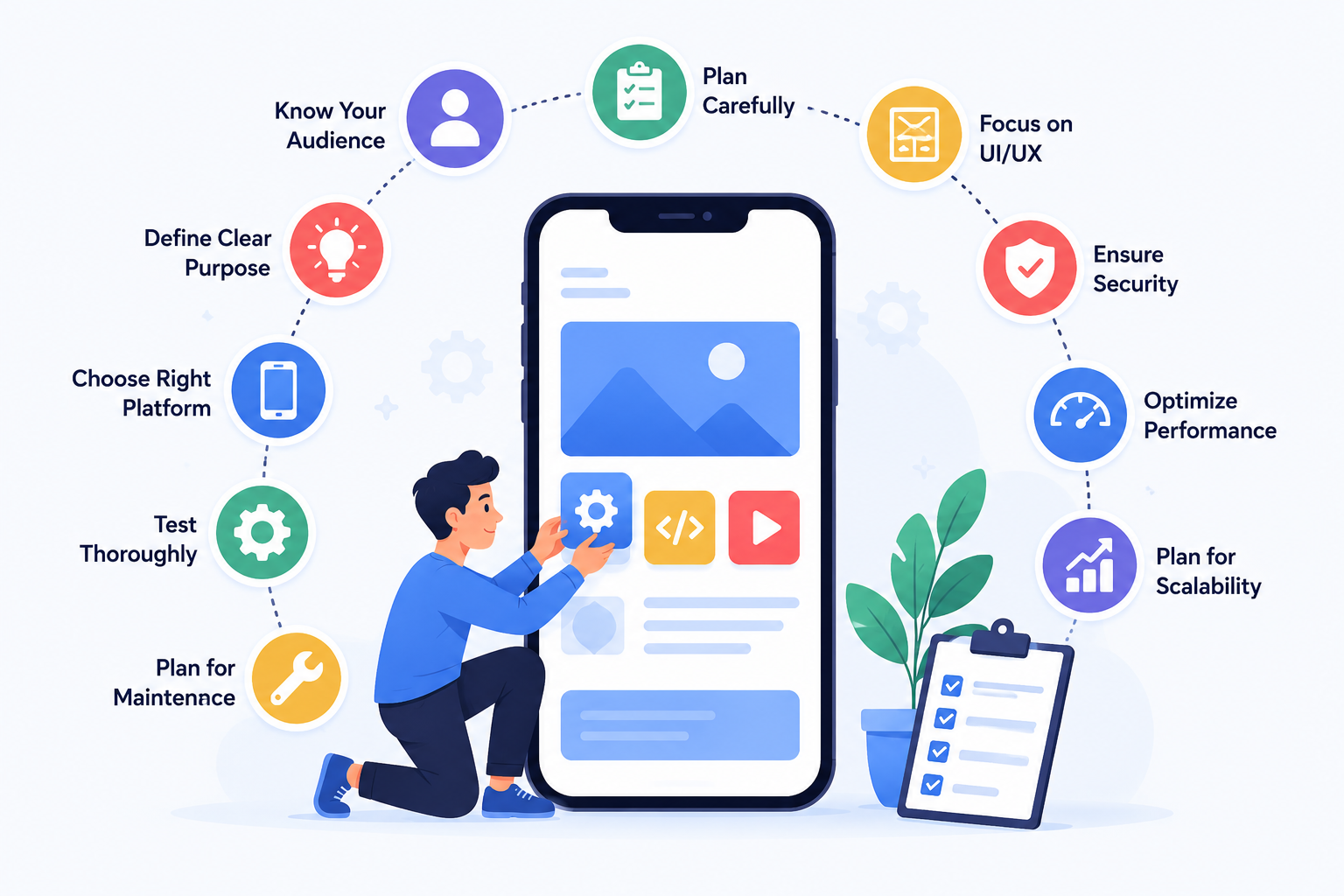
Mobile applications have become a powerful tool for online retailers looking to improve customer engagement and increase sales. However, successful app development requires careful consideration of platform selection, user experience, security, scalability, and long-term business goals. By focusing on customer needs and building a solution that delivers real value, retailers can create mobile experiences that strengthen brand loyalty and drive sustainable business growth.