

How We Improved Our Website URLs for Better SEO and User Experience

Cleaner URLs, Better Experience: Introducing Shorter, Faster Links on Our Website
Today, we’re excited to share a major website improvement: we’ve optimized our URLs to be cleaner, shorter, and more search engine-friendly. This update makes links easier to read and share, improves performance and SEO, and gives our site a more professional appearance.
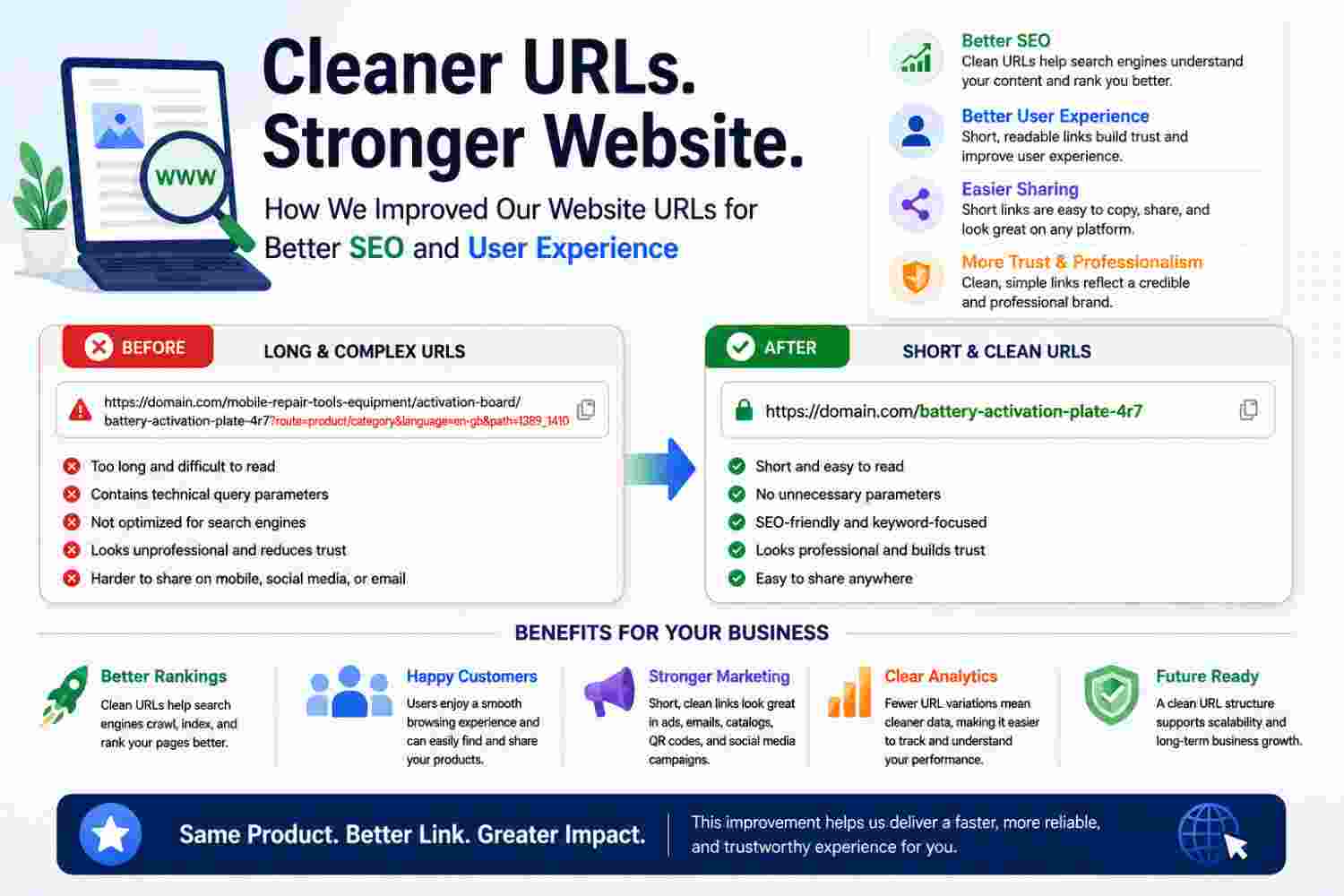
The problem: long, complex URLs
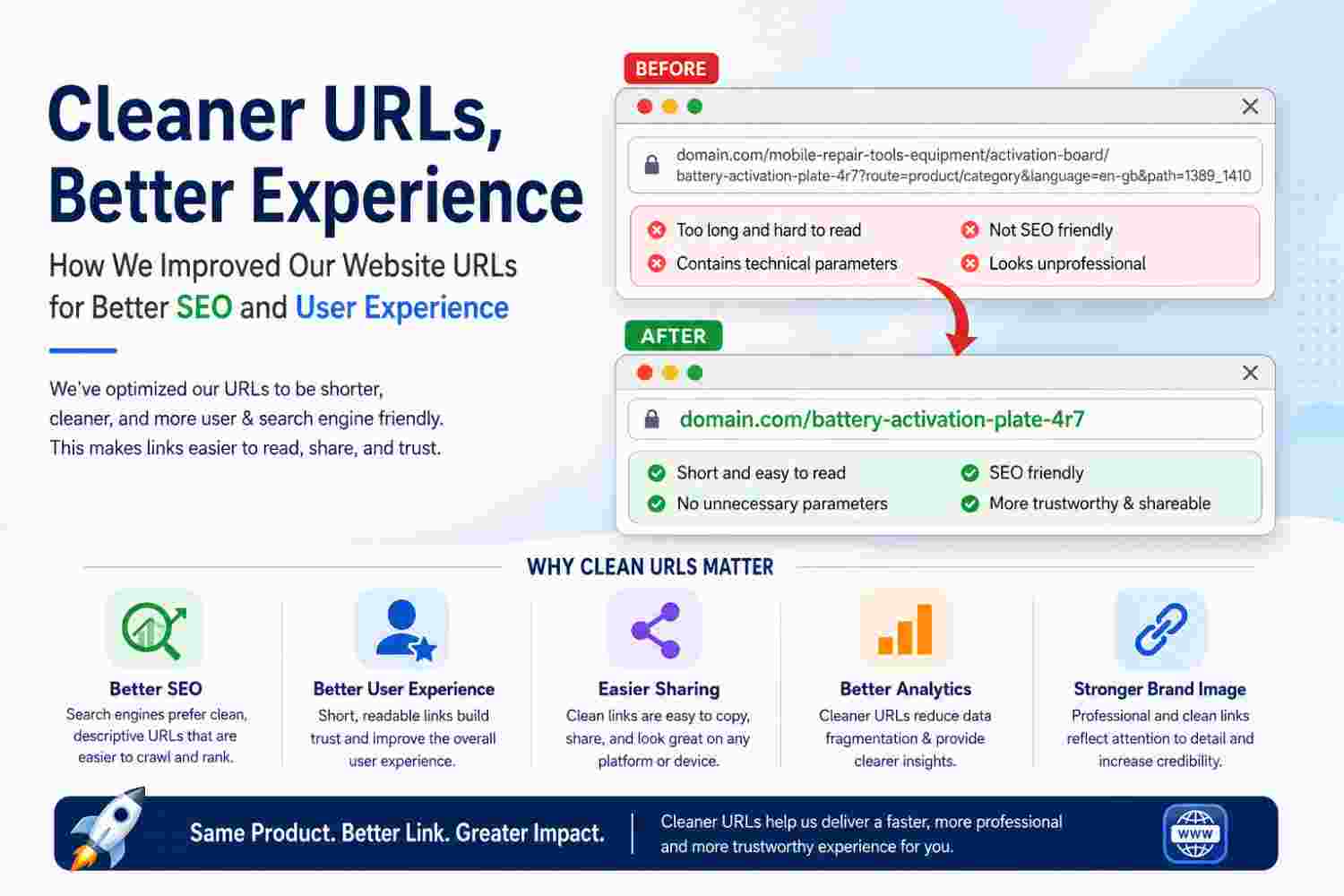
Previously, our product pages used long URLs that included category paths and technical parameters, for example:
These URLs caused several issues:
- Too long and difficult to share
- Contained technical query parameters that reveal implementation details
- Not optimized for search engines
- Looked unprofessional and could reduce user trust
The solution: short, clean URLs
We simplified their structure so pages now use compact, descriptive addresses. The same product above now appears at:
https://domain.com/battery-activation-plate-4r7
Key characteristics of the new URLs:
- Short and easy to read
- No unnecessary parameters
- Descriptive and SEO-friendly
- More trustworthy and shareable
What we changed
We applied the following structural updates across the site:
- Product pages
- Old: /category/subcategory/product-name?parameters
- New: /product-name
- Category pages
- Old: /category/subcategory?route=product/category
- New: /category/subcategory
These changes reduce URL length and eliminate implementation-specific query strings from public links.
Why clean URLs matter
- Improved SEO
- Search engines prefer concise, descriptive URLs. Clean URLs make it easier for crawlers to understand page content and can contribute to better rankings.
- Better user experience
- Short, readable links look professional and create more trust. Users are more likely to click links that look tidy and meaningful.
- Easier sharing
- Short links display better on mobile, social apps, and messaging platforms without getting truncated or looking cluttered.
- Analytical clarity
- Cleaner URLs reduce fragmentation in analytics (fewer query-parameter variations), making traffic and performance data easier to interpret.
Real example
After:
https://domain.com/battery-activation-plate-4r7
This single change makes the link easier to remember, share, and index.
How we implemented the change (high level)
To ensure a smooth transition, we followed best practices during rollout:
- Generated clean URL routes for products and categories.
- Implemented 301 redirects from old URLs to the new canonical URLs to preserve SEO value and avoid 404s.
- Added canonical tags to pages to clearly indicate the preferred URL to search engines.
- Updated internal links, navigation elements, and any template-based references to use the new URLs.
- Regenerated and resubmitted XML sitemaps to search engines.
- Ensured analytics tracking recognizes and groups the new URLs correctly.
- Performed QA and monitoring to catch any broken links or indexing issues.
Best practices we followed (and recommend)
- Keep URLs short and descriptive (use meaningful keywords when appropriate).
- Use hyphens to separate words (not underscores).
- Avoid exposing technical parameters or session IDs in public URLs.
- Use lowercase letters to prevent duplicate-content issues.
- Implement 301 redirects from old URLs to new ones to preserve link equity.
- Use canonical tags to indicate the preferred page URL.
- Update sitemaps and resubmit to search engines after a URL structure change.
- Monitor logs, search console reports, and analytics after changes to detect crawl errors or drops in traffic.
What this means for you
- For customers: links will be easier to read, remember, and share across devices and platforms.
- For partners and affiliates: shorter links make marketing materials cleaner and more clickable.
- For search visibility, we expect improved indexing clarity and better long-term SEO performance.
Conclusion
This URL optimization is a straightforward improvement with outsized benefits: cleaner website structure, improved navigation, better social sharing, and better search engine performance. By removing unnecessary parameters and shortening page addresses, we’re making our site faster, more trustworthy, and easier to use—for customers and search engines alike.
If you notice any broken links or have questions about specific links you use frequently, don't hesitate to get in touch with our support team so we can help.